Hey everyone, if you’ve ever worked with industrial components—whether you’re designing a new piece of machinery, maintaining a factory line, or even tinkering with automotive parts—you’ve probably heard of wave springs. But I bet most folks don’t talk about their damping effect nearly enough. As a wave spring supplier, I get questions every week about load capacity, space savings, lifespan… but damping? That’s the secret superpower that makes them way more versatile than people give credit for. Let’s break this down like we’re chatting over a coffee, no fancy jargon overload, promise. Wave Spring
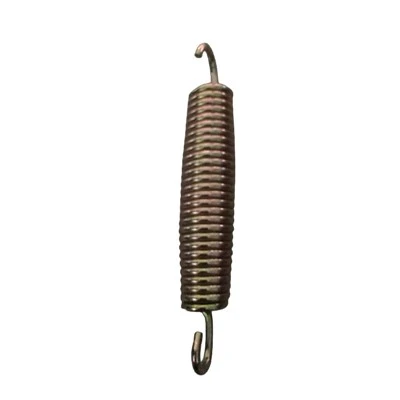
First, let’s start with the basics so we’re all on the same page. A wave spring is that thin, flat metal ring with those tiny, repeating waves (not actual big ocean waves, don’t get excited) around the circumference. Instead of being a solid helical spring like the ones you’d find in a pen, they’re way slimmer—like, half the height or less, depending on the design. That’s why engineers love them for tight spaces: they fit into grooves that a regular coil spring can’t squeeze into, no extra bulk needed. But here’s the part that’s not just about size: when those waves get compressed, they deflect, right? And that deflection isn’t just about storing energy for a quick snap. That’s where the damping effect comes in.
Wait, hold up—let’s make sure we’re defining damping correctly, because it’s not the same as “shock absorption” (though they’re related, people mix those up all the time). Damping is basically how a system dissipates energy when it’s moving or vibrating. Like, if you push a swing and let go, it goes back and forth for a while before stopping. Damping is what makes that stop eventually, not swinging forever. For springs, damping doesn’t usually mean a separate rubber or hydraulic part—wait, no, actually, wave springs do that work on their own, just from their design. That’s the key thing here.
So, how does a wave spring’s structure create that damping? Let’s get into the nitty-gritty, but keep it real. When a wave spring is compressed, each individual wave crest and valley isn’t just bending in a smooth line—they flex, right? And when metal flexes, it loses a tiny bit of energy as heat. That’s called “material damping” or “hysteresis,” and it’s baked right into every wave spring. But it’s not just that basic metal loss; the way the waves are spaced, their height, the number of waves per ring—all that tweaks how much damping you get. Compare that to a regular coil spring, which is a long, tight helical wire. Coil springs have less surface area flexing per unit of height, so their material damping is way lower. You need extra parts, like a shock absorber or a rubber grommet, to get the same energy dissipation. Wave springs? They do that job themselves.
Let’s talk about real-world examples, because that’s where this matters. I’ve had a customer in the heavy truck industry reach out last year, complaining that their transmission parts were vibrating so bad during hauling on rough roads, they’d wear out the bearings in 6 months. They tried regular coil springs first, but even with a dampener, the springs were too bulky and didn’t cut the vibration enough. They switched to our flat wave springs, and here’s what happened: the wave spring’s design turned those constant, high-frequency vibrations (that are killing parts) into small, controlled flexes, dissipating the energy before it could damage anything. The bearing lifespan jumped to 2 years—triple the original. That’s the damping effect doing its work, plain and simple. No extra parts, no extra space, just a spring that does two jobs: holds the load and calms the vibration.
Another example: industrial pumps. Pumps run nonstop, right? They’re dealing with fluid pressure changes, shaft wobble, all sorts of dynamic forces. A friend of mine who works in pump manufacturing told me they were using O-rings for load retention, but those would degrade fast from the constant movement, leading to leaks. They swapped in wave springs around the pump’s shaft seal. The wave spring’s damping effect tames the small, repetitive vibrations from the shaft spinning, so the seal stays tight, no more leaks. The O-rings now last 4 times longer, too, because there’s less movement and stress on them. That’s a total win for maintenance and cost.
Wait, but let’s be honest—this isn’t magic. The damping effect of a wave spring isn’t one-size-fits-all. If you call me and say “I need a wave spring with maximum damping,” I can’t just pull the same part off the shelf and send it. I have to ask about your specific application: what’s the load? What’s the frequency of vibration? How much space do you have? For example, a wave spring with higher wave height will deflect more when compressed, which means more flex, more energy lost as heat, more damping. But too high a wave height, and you risk plastic deformation—meaning the spring won’t bounce back, which is a whole other problem. On the flip side, a spring with more waves per inch has more contact points flexing, so more damping than a spring with fewer waves, but again, only if that fits your load requirements. If you need heavy load support, we’ll adjust the material too—some alloys have higher inherent damping than others, like carbon steel vs. stainless steel. That’s where the expertise comes in, which is why as a supplier, I don’t just sell parts—I help engineers tweak the design to get exactly the damping they need.
A common question I get: “Why not just use a rubber damper? They’re cheaper, right?” Yeah, maybe upfront, but rubber degrades over time. UV exposure, temperature changes, oil—all that makes rubber hard or sticky, so it stops damping. Wave springs are made of metal, usually heat-treated to last for thousands of compressions, even in tough environments (like high heat in engines, or cold in refrigeration units). The damping effect from a wave spring is consistent, not something that wears out after 6 months. That’s a huge long-term cost saver for industrial operations, where downtime costs way more than the price of a few springs.
Wait, let’s also clear up a myth I hear all the time: people think damping is only for high-vibration applications. No way! Even in low-vibration setups, wave springs’ damping effect helps with what’s called “settling.” Settling is when parts shift over time under constant load, like a bolt working loose because of tiny, constant movements. The small amount of damping from a wave spring keeps those movements from adding up, so bolts stay tight, assemblies stay aligned. That’s why I’ve had customers in robotics use wave springs in their arm joints—no big vibrations, just enough controlled movement to keep the robot accurate, no part creep over thousands of cycles.
Now, let’s get into how this compares to other spring types, just to drive the point home. Coil springs: as I said, low material damping, need external dampers. Bellville springs (those conical washers stacked together): they have a bit more damping than coil, but they’re stiffer, so not good for high-frequency, small-amplitude vibrations. Wave springs? They sit right in the middle, with a damping effect that’s tailored for small to medium loads, dynamic movement, tight spaces. It’s not that wave springs are better for every job, but their damping is such an underrated benefit that so many engineers sleep on it until they have a vibration problem that’s costing them money.
Let’s talk about a recent project I worked on with a medical device company, to mix it up a little. They were making a portable insulin pump, and the design called for a tiny, lightweight part that would hold the plunger in place and dampen the small movements from the user walking around, because those movements could throw off the dosage. Regular coil springs were too thick, and rubber dampeners added too much bulk. We used a miniature wave spring—only 10mm in diameter, super thin, with exactly the right wave height to give just enough damping to stop the plunger from shifting, but not so much that it required too much force to move when dosing. The device passed all its durability tests, and the client came back saying it’s one of the most reliable parts they’ve used. That’s damping at work in a place you’d never expect, right?
So, what should you take away from all this? First, wave springs aren’t just space-saving alternatives to other springs—their damping effect is a practical, cost-effective solution for a ton of vibration and movement issues that pop up in industrial, automotive, medical, and robotics applications. Second, the damping isn’t random; it’s designed into the wave pattern, material, and dimensions, so you can adjust it to fit your exact needs. Third, if you’re dealing with vibration, part wear, or settling, don’t overlook a wave spring’s ability to dissipate energy on its own, no extra parts required.

As a wave spring supplier, I’ve seen so many customers solve their biggest problems just by switching to the right wave spring design. Whether you’re working on a new prototype, troubleshooting an existing assembly, or just looking to cut down on maintenance costs, the damping effect is a key feature that’s worth exploring. If you’re curious about how a wave spring could work for your application, or you have questions about adjusting wave height, number of waves, or material to get the exact damping you need, don’t hesitate to reach out. We can walk through your requirements, tweak the design, and make sure you get a part that does more than just hold a load—add reliability, cut downtime, and save you money in the long run. No jargon, no pressure, just real advice from someone who’s worked with wave springs for years.
Extension Spring Reference:
- Shigley, J. E., Mischke, C. R., & Budynas, R. G. (2004). Standard Handbook of Machine Design (3rd ed.). McGraw-Hill.
- Nabors, K., & Kimball, A. L. (1996). Spring Design: Theory and Practice. Society of Manufacturing Engineers.
- Bloch, H. P. (2000). Machinery Component Maintenance and Repair. CRC Press.
Shengzhou Deyuxiang Hardware Accessories Co., Ltd.
We are one of the most professional wave spring manufacturers and suppliers in China, also support customized service. With abundant experience, we warmly welcome you to buy high quality wave spring made in China here and get pricelist from our factory. For price consultation, contact us.
Address: No. 38, Caosheng Road, Caoqiao Street, Pinghu City, Jiaxing City, Zhejiang Province
E-mail: 877286126@qq.com
WebSite: https://www.dyx-spring.com/
