Let’s start with a quick story: A few months back, I got a frantic call from a small commercial office manager in downtown Columbus. His 12,000-square-foot building had been running its HVAC system nonstop for three months, yet utility bills were up 32% year-over-year, and half the office was complaining of stuffy air while the other half needed sweaters. I asked him if he’d ever adjusted his air dampers, and he said, “Air what? I just thought the vents let air in and out.” That’s when it clicked for me—even dozens of building managers and contractors I talk to every day don’t realize how much a simple air damper can shift their HVAC efficiency. And as someone who’s been supplying air dampers for 11 years, I’ve seen firsthand how a misconfigured or missing damper isn’t just a small oversight—it’s a hidden drain on energy, comfort, and long-term operational costs. Air Damper
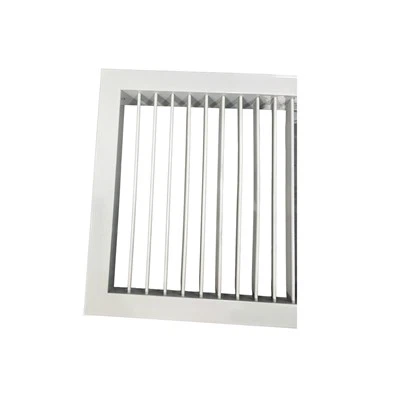
First, let’s break down what an air damper actually does, because it’s way more than a manual vent flap you open and close in a old house. At its core, an air damper is a controllable gate inside your HVAC ductwork that regulates the flow of heated or cooled air to specific zones in a building. For example, in a two-story home, you might zone the second floor (which gets way sunnier in summer) as a separate zone from the first floor. The damper for the second floor will open fully in July when it needs extra cool air, and close or partially throttle it in December when that space doesn’t need as much heat. That might sound basic, but here’s the part most people miss: HVAC systems are designed for average loads, not the unique needs of every space in a building. Without dampers, your system has to push the same amount of air to every room, even if half that air is going to a unused storage closet or a room that’s already at the perfect temperature.
Now, let’s talk about how that directly hits efficiency. The HVAC industry’s own data—like from the Air Conditioning Contractors of America (ACCA)—says that improperly balanced ductwork (which is almost always a damper issue) can lead to 15-25% wasted energy annually. Let’s put that in real numbers: if a building’s annual HVAC energy cost is $10,000, that’s $1,500 to $2,500 down the drain every year. Where does that waste come from? Two big places: over-pressurization and short cycling.
Over-pressurization is when a damper is stuck open for a zone that doesn’t need much air, so the ductwork pressure spikes. HVAC fans are sized to move a specific amount of air, and when pressure is too high, the fan has to work harder—using more electricity to push air through those tight ducts. I had a client in a medical office last year who noticed their fan motor was failing every 18 months, compared to the industry average of 7-10 years. When we pulled the duct logs, we found their supply air damper for the empty third-floor break room was stuck open from a renovation 18 months prior. The constant over-pressure was grinding down the fan’s bearings. Replacing that damper and rebalancing the ductwork didn’t just cut their energy bill by 18%—it also extended their fan’s lifespan by three times. That’s not a minor win; that’s a direct ROI on a $200 damper part.
Then there’s short cycling. That’s when your HVAC turns on and off constantly instead of running at a steady, efficient cycle. When a damper is closed or partially blocked for a zone that’s already at temperature, the system senses it’s over-cooled or over-heated and shuts off early—before it can complete its full cycle. Short cycling uses 30% more energy per hour than a steady run, per the U.S. Department of Energy (DOE). I worked with a residential client last winter who was paying $400 a month for heat, 20% more than his neighbors in the same neighborhood. His HVAC tech pointed out his master bedroom air damper was fully closed because he thought closing it would “save energy.” The problem? That bedroom had a window that leaked cold air, so the HVAC would kick on for 15 minutes, warm the rest of the house, then shut off, and by the time the bedroom got warm again, the whole cycle repeated. When we opened that damper slightly to compensate for the window’s load, his monthly bill dropped to $310. Closing a damper to save energy had the exact opposite effect because of the unbalanced load.
Wait, but what about smart dampers? I know a lot of people hear “air damper” and think of the manual ones from the 90s, but modern smart air dampers are a game-changer for efficiency too. Unlike manual dampers that only adjust when someone remembers, smart dampers sync with your HVAC thermostat or building management system (BMS) to adjust air flow automatically based on real-time zone data. For example, a school district I supply for uses smart dampers to turn down air flow to classrooms that have no students during holidays or weekends. Before installing our smart dampers, those classrooms were wasting 12 hours of heated or cooled air every day they were empty. After the upgrade, their district-wide HVAC energy use dropped by 22% in the first year. That’s a number that adds up for large facilities, and it’s why smart dampers are now standard in most commercial new builds.
But it’s not just commercial buildings—residential spaces benefit too. A lot of single-family homes have unbalanced ductwork, especially older ones, where the second floor is always too hot or too cold because air can’t reach it properly. Adding zone-specific dampers lets you direct more air to the second floor in summer, and more to the first floor in winter, instead of running the whole system at full blast. I’ve seen homeowners cut their residential HVAC bills by 10-15% just from adding basic dampers, no other upgrades needed.
Now, let’s address the common mistakes I see with air dampers that actually hurt efficiency, because not all damper installations are created equal. First, sizing. A damper that’s too small for your ductwork can create even more pressure issues than no damper at all. I’ve had clients who bought cheap, off-the-shelf dampers that were 2 inches too small for their 12-inch duct, and that caused a bigger pressure spike than if they’d skipped the damper entirely. Second, installation location. Dampers need to be placed at least 3 duct diameters away from any elbow or transition in the ductwork, otherwise they can disrupt air flow even when adjusted correctly. A bad damper installation is a waste of money, so that’s why it’s important to work with a supplier that knows how to match the right damper to your duct size and layout, not just sell you the cheapest one. Third, maintenance. Dampers, especially the motorized or smart ones, can get clogged with dust, debris, or even small pests over time, which makes them stuck open or closed. I recommend inspecting dampers every 2-3 years, which is a simple task that prevents bigger efficiency hits.
Let’s circle back to that story I opened with. That office manager in Columbus? We sent a technician to check his dampers, and we found 3 out of 5 zone dampers were misaligned—stuck partially closed or fully open for unused zones. We adjusted them, recalibrated his BMS, and within 6 months, his utility bills dropped by 28%, and his staff comfort complaints went from 12 a week to zero. He later told me that was enough to cover the cost of the damper upgrades twice over in one year. That’s the real impact of a damper— it’s not a fancy HVAC add-on, it’s a core component that fixes a lot of hidden energy waste.
At the end of the day, HVAC systems are designed to work efficiently when air flow is balanced. Air dampers are the tool that lets you customize that balance to fit your building’s unique needs. Whether you’re a small business owner looking to cut monthly energy costs, a residential homeowner tired of uneven rooms, or a building manager working on a new commercial build, the right air damper solution isn’t just a cost—it’s an investment in long-term efficiency and comfort.

If you’re tired of hidden energy drains, uncomfortable spaces, or wondering if your dampers are holding your HVAC back from peak performance, we’re here to help. Reach out to discuss your specific needs, and we’ll connect you with the right damper type, size, and installation support for your building.
Fan References:
- Air Conditioning Contractors of America. (2022). HVAC Duct Design and Balance Best Practices.
- U.S. Department of Energy. (2023). Improving HVAC Efficiency in Commercial and Residential Buildings.
- National Environmental Health Association. (2021). Zoned HVAC Systems and Energy Savings.
- Air Movement and Control Association International. (2022). Air Damper Performance Standards for HVAC Applications.
Jiangsu Hengyu Fire Protection Technology Co., Ltd.
We’re well-known as one of the most experienced air damper manufacturers in China, also support customized service. With abundant experience, we warmly welcome you to buy bulk discount air damper from our factory. If you have any enquiry about quotation, please feel free to email us.
Address: Jiangsu Hengyu Fire Protection Technology Co., Ltd., No.56, Xinyi Road, Chengbei Industrial Park, Jingjiang City, Jiangsu Province
E-mail: Jskyxfkj@163.com
WebSite: https://www.cehengyu.com/
