If you’re running (or prepping to build) a steel structure barn—whether it’s for livestock, storage, or even a small workshop—you’ve probably wondered why everyone talks about ventilation like it’s make-or-break. As a steel structure barn supplier who’s helped folks install these for over a decade, I see so many skimp on venting to save a few bucks, only to deal with mold, rust, or that gross, stuffy smell that lingers all year. Let’s cut through the jargon and get to the real, doable stuff that actually works for steel barns, not the generic advice you’ll find on random farm blogs. Steel Structure Barn
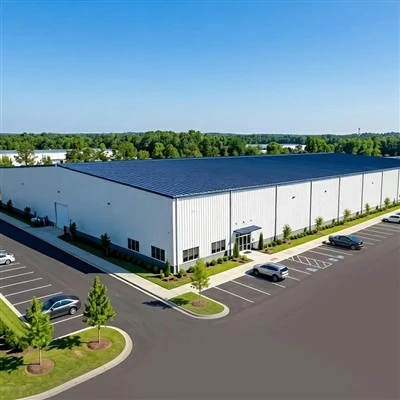
First, let’s get why steel barn venting is non-negotiable straight. Unlike wood barns, which breathe a little on their own through gaps and natural fibers, steel is basically a solid shell—zero give for moisture. When livestock are inside, they breathe out tons of water vapor, urine adds more, and even stored hay or grain sweats a little (that’s called “respiration,” and it’s real). Without venting, that moisture gets trapped, condenses on the cold steel ceiling or walls, and over time: it eats through the paint, causes rust, and turns your barn into a moldy mess that’s bad for animals, bad for stored goods, and bad for you to walk into every day. I’ve had a customer who skipped venting on a 40×60 barn for his sheep; six months later, half the ceiling steel had rust spots so bad he had to replace panels. That $50 he saved on venting cost him $2,000 in repairs. Not worth it.
Now, the “how” is where most people mess up. It’s not just “cut a hole in the roof and call it good.” You need a system that works with steel’s rigid structure, not against it. Let’s break this down into the two main types of vents, how to size them right, and a few pro tips I’ve picked up over the years.
First, the two core vent categories: passive and active. Passive is the no-power, work-with-nature kind—great for most small to medium barns, cheaper to install, and low-maintenance. Active is for larger barns, or ones with extra-moisture loads (like a barn that holds 100 cows or tons of wet grain). Let’s start with passive because that’s what 90% of our customers go for.
Passive venting has two parts: intake vents (let fresh, dry air in low down) and exhaust vents (let moist, warm air out high up). The key here is “cross ventilation”—you don’t just exhaust from one side; you bring in air evenly so it flows through the whole barn, not just a tiny area. For steel barns, the rule of thumb we swear by (and it’s backed by ag engineering, not just my gut) is 1 square foot of vent area per 50 square feet of barn floor space—half intake, half exhaust. So a 40×60 barn is 2,400 square feet total, meaning 48 square feet of vents, 24 intake, 24 exhaust. That’s way more than most people do, but it’s exactly what stops that condensation.
What kind of passive vents work best for steel? For exhaust, ridge vents and cupolas are the go-to. Ridge vents run along the peak of the barn’s roof—perfect because warm, moist air naturally rises to the peak, so the ridge vent lets it escape right where it’s concentrated. I always tell customers to go with continuous ridge vents, not individual ones spaced out—individual ones leave gaps where wind can push rain or snow in, and they don’t move as much air. For intake vents, wall soffit vents (the ones under the roof overhang) or gable end vents work, but I prefer soffit vents because they’re less noticeable, don’t stick out like a sore thumb, and keep air flowing evenly along the whole side of the barn. Just make sure you don’t block the soffits—if you stack hay bales or store equipment right up against the walls, you’re cutting off intake. That defeats the whole purpose.
Now, active venting. This is for when passive isn’t enough—big operations, barns with very high moisture, or barns in super humid climates. Active vents use exhaust fans, usually mounted high up near the peak, that pull air out faster than natural passive flow can. Some people mix passive and active, too—like a ridge vent for backup, plus a fan to crank it up on extra-muggy days. When sizing active fans, follow the same rule: you need enough CFM (cubic feet per minute) to exchange the entire volume of the barn every 2 to 3 minutes. For a 40x60x12 barn, that’s 28,800 cubic feet total, so you need a fan that can pull 9,600 to 14,400 CFM. Skip the cheap, tiny fans from big box stores—they burn out fast, and you’ll be replacing them every year. Stick to fans rated for agricultural use, made to handle dust and humidity, not just a tiny shed.
Wait, I should mention a common mistake with both types: not accounting for insulation. A lot of people insulate their steel barns now, especially if they’re using them for living space or high-value animals (like show pigs or horses). If you insulate, you still need venting—insulation helps keep the barn warm, but it doesn’t stop moisture from building up inside the space between the steel and the insulation. That’s a recipe for mold on the insulation and rust on the steel behind it. So if you insulate, bump up your vent area by 20%—it’s a small add-on that saves you from a big headache later.
Let’s get into specific, real examples from my customers. Last year, a guy came to me with a 30×40 barn he built for his hay storage. He initially only put two 12-inch exhaust vents on the roof, no intake. A month later, he called saying his hay was molding—smelled like mildew, and half the bales were ruined. We walked through it, explained the intake/exhaust split, and he added soffit vents along both long sides. Within two weeks, the mold was gone. He saved his $1,500 hay crop, which covered the cost of the extra vents. Another customer has a 50×100 barn for 80 dairy goats—we installed a combination of continuous ridge vents and two 12,000 CFM exhaust fans, plus soffit intake. He says even on the hottest, wettest summer days, the barn doesn’t smell like ammonia anymore, and the steel ceiling stays dry.
Now, installation tips that only a barn supplier would know. First, when cutting holes for vents in steel, don’t rush it. Steel is sharp, and if you use a dull drill bit, you’ll get burrs that can rust. Use a metal-cutting bit, and seal around the vent flange with a high-quality silicone caulk made for metal—standard caulk cracks in cold or hot weather, and you’ll get leaks. Second, make sure vents are spaced evenly. For ridge vents, they should run the entire length of the peak, not just a section. For soffits, don’t just put vents on one side—put them on both, so air flows through the barn. Third, if you’re adding vents to an existing barn, don’t skip cleaning out the old insulation or debris before cutting holes. Old nests, dust, or mold will get in and clog the vents, making them useless.
What about common myths I hear all the time? Let’s bust a few. Myth #1: “Open doors and windows is enough.” Nope—on windy days, air will just blow straight through the open doors, leaving the middle of the barn stagnant. On calm days, no air moves at all. Myth #2: “More vents = better.” Not true—if you have way too many exhaust vents without enough intake, you’ll pull moisture from the inside but not replace it with dry air, which can cause negative pressure and pull in cold air from outside, making the barn colder for animals. Stick to that 50/50 intake/exhaust split I mentioned earlier. Myth #3: “Rust is normal on steel barns.” Sure, a little surface rust if you scratch the paint, but rust from trapped moisture is preventable with good venting. Don’t accept that as “just part of owning a steel barn.”
Wait, what about seasonal adjustments? I tell all customers to tweak their venting a little depending on the time of year. In winter, you don’t want to blow all the warm air out, but you still need enough to stop moisture buildup. So turn down active fans, or close a small portion of ridge vents (wait, no—don’t close ridge vents, you can install adjustable vent covers that you can flip in winter. That’s a game-changer). In summer, crank the fans or open all intake vents to pull in cool, dry air. For passive systems, just make sure there’s no debris blocking vents in the fall when leaves or snow piles up—check every few months, especially after storms.
Now, if you’re planning a new steel barn, how do you build venting right into the design, instead of adding it later? That’s way cheaper and easier. When you order your steel panels, tell your supplier you want pre-cut vent openings for soffits or gable ends. For ridge vents, we can pre-punch the roof panels so you don’t have to cut them on site, which saves time and avoids mistakes. If you’re getting an active system, we can even coordinate with the fan manufacturer to mount them on the roof during installation, so it’s all one job, not two.
I know, I get it—venting is an extra cost, and when you’re already budgeting for steel panels, construction, animals or storage, it’s easy to cut corners. But here’s the thing: the cost of good venting is usually less than 5% of your total barn cost. The cost of fixing mold, rust, or ruined hay? That can be 10x that, or more. Last year, a customer came back to me because his unvented barn’s steel ceiling had rusted so bad it was caving in—he had to replace the whole roof, which cost him $8,000. If he’d spent $400 on venting, he never would have had that problem.
If you’re still not sure what you need, or you’re planning a new steel barn and want to make venting part of the plan, don’t second-guess it. I’ve worked with hundreds of farmers, hobbyists, and small business owners on their steel barns, and I can help you figure out exactly the right vent system for your space, your animals, and your budget. Skip the generic advice, skip the cheap vents that break in a year—we’ll give you a system that works, and we’ll back it up with the support you need to install it right. Reach out to chat through your needs, no pressure, no hidden costs.
Steel Structure Building References:
- University of Minnesota Extension. (2021). Ventilation Guidelines for Agricultural Buildings.
- American Society of Agricultural and Biological Engineers (ASAE). (2019). Standard for Ventilation of Animal Enclosures.
- National Farm Building Code. (2020). Chapter 7: Ventilation of Metal Agricultural Structures.
- Steel Building Institute. (2022). Best Practices for Ventilation in Steel Agricultural Barns.
Shenyang Huaying Weiye Steel Structure Co., Ltd.
Shenyang Huaying Weiye Steel Structure Co., Ltd. is one of the most professional steel structure barn manufacturers and suppliers in China, featured by quality products and good price. Please rest assured to wholesale CE approved steel structure barn made in China here and get quotation from our factory. We also accept customized orders.
Address: Shenyang Huaying Weiye Steel Structure Co., Ltd., Hongxing Road, Yuhong District, Shenyang City, Liaoning Province, China.
E-mail: syhywy.ss@gmail.com
WebSite: https://www.steelstructurehy.com/
