Hey there, if you’ve ever watched a construction crane hoist a pile driver 10 stories high, saw a dump truck tilt its bed to unload gravel, or even used a car lift to get under your ride for oil changes, you’ve interacted with a hydraulic actuator — probably without even realizing it. I’ve been selling these bad boys for almost 10 years, working with everyone from small-town equipment shops to massive mining operations, and let me tell you, the magic behind how they work is way simpler than most folks think (and way less scary than those dense engineering textbooks make it out to be). Today, I’m breaking this down like I would for a new tech at my warehouse — no stuffy jargon, no weird acronyms thrown at you outta nowhere. Hydraulic Actuators
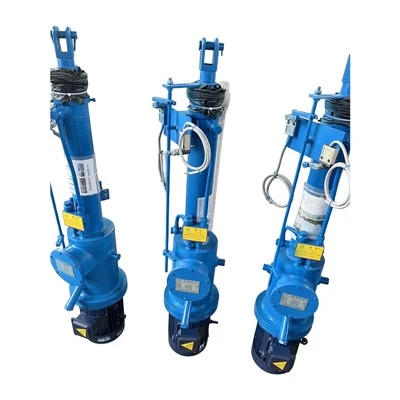
First off, let’s cut to the core: a hydraulic actuator is basically a muscle that runs on oil, not electricity or combustion. It takes the teeny-tiny force you put into a hydraulic pump and amplifies it to move super heavy stuff, way more than you could ever do with your bare hands. But how? The whole thing hinges on one super old physics rule — Pascal’s Principle, right? Blaise Pascal came up with this back in the 1600s, and it basically says when you apply pressure to a closed container of fluid, that pressure gets spread equally in all directions, no matter where you are in the container. No fancy rocket science there, just fluid physics. Let’s make this relatable with a example everyone gets: a waterbed. If you push down on one corner, the whole bed’s surface dips, right? That’s pressure moving equally. Hydraulic actuators use the same idea, just with oil instead of water, and tubes and pistons to turn that pressure into movement.
Let’s start with the basic parts of a linear hydraulic actuator — the most common type you’ll see everywhere. Linear means it moves in a straight line, like pushing a door open or lifting a crane arm straight up. First, you’ve got the power source: a hydraulic pump. This is the guy that takes low-pressure oil from a reservoir (that’s just a big tank, usually metal, that holds the fluid when it’s not being used) and shoves it into lines under high pressure. The pump is usually run by an electric motor or a small gas engine, depending on if it’s mounted on a construction site or a factory floor.
Next up, the part that does the actual moving: the piston and cylinder. Think of the cylinder as a long, hollow tube — like a giant straw, but way thicker and way stronger — with a piston sliding inside it. The piston is a round disk that fits super tight against the cylinder walls, so oil can’t leak from one side of the piston to the other. On one side of the piston, you feed that high-pressure oil from the pump. That pressure pushes the piston forward (or backward, depending on which side you feed it to). Attached to the piston is a rod — that’s the part that sticks out of the cylinder and actually does the work. So when high-pressure oil shoves the piston, the rod extends or retracts, moving whatever it’s hooked to. That’s it, basically, for the most basic linear actuator.
Wait, you might be thinking — that’s cool, but how do you make it go back the other way? Oh right, that’s where the hydraulic valve comes in. Valves are like traffic lights for the oil. A directional control valve lets you switch which side of the piston gets high-pressure oil and which side drains back to the reservoir. Let’s say you want the rod to extend: the valve sends high-pressure oil to the cap end of the cylinder (the closed, flat end opposite the rod) and opens the rod end to let the oil that’s already there flow back to the reservoir. Flip the valve, and now high-pressure oil goes to the rod end, pushing the piston the other way, and the cap end drains. Super simple, no tricks there.
Now, what about those rotary hydraulic actuators? Those are the ones that spin, like the swing mechanism on a backhoe or a robot arm turning a wrench. They work on the same Pascal’s Principle, just use a different inner part instead of a piston and rod. Instead of a straight piston, you’ve got a gear or a vane inside a housing. When high-pressure oil hits one side of the gear or vane, it spins around the center shaft, which can rotate hundreds of degrees (or even full 360 turns, depending on the model). I sell a lot of these for material handling and aerospace parts — they’re way more reliable than electric motors for heavy rotating loads because they don’t overheat as easy under constant stress.
Let’s get into the real-world numbers to make this make sense. Pascal’s Principle also has that formula, right? Force equals pressure times area. So if you have a small piston with a 1-inch area, and you apply 100 psi (pounds per square inch) of pressure, you get 100 pounds of force. But if you connect that small piston to a big piston with a 10-inch area, that same 100 psi gives you 1,000 pounds of force. That’s the amplification everyone talks about! So a 150 psi pump hooked up to a 10-inch cylinder can easily lift a 1,500-pound dump truck bed — which is exactly what you see on those construction sites. The key here is that pressure is consistent, so bigger area equals way more force. That’s why hydraulic actuators beat electric or pneumatic (air-powered) every time for heavy lifting — air compresses, so you lose force, but hydraulic oil is almost incompressible, so almost all the pressure becomes movement force, not just squishing the fluid.
Wait, I should mention the fluid, too — not all oil is the same. A lot of new customers ask me why we don’t just use water. The answer is simple: water would rust all the parts, and it would leak way too easy. We use hydraulic fluid — it’s a specific type of oil that’s thick enough to seal the piston, doesn’t freeze in cold weather, doesn’t boil in hot heat, and lubricates all the inner parts so they don’t wear out. If you use the wrong fluid, you’ll get leaks, decreased force, or even break the actuator within months. I always warn new guys about this — way more actuators go bad from wrong fluid than from overloading, that’s a fact.
Now, let’s talk about the small stuff that makes a big difference, because I’ve seen so many people cut corners here and end up with broken parts. Seals! The piston rod has seals around it where it sticks out of the cylinder, right? If those seals wear out, high-pressure oil leaks out, so you lose pressure, and the actuator gets weak or stops moving. That’s why regular maintenance is non-negotiable — check seals every 6 months, top off the reservoir with the right fluid, and change filters. Filters are another big one — they catch dirt and metal shavings from the pump, so they don’t scratch the piston or cylinder walls. A $20 filter can save you a $2,000 actuator, easy.
I remember a customer last year, a small farm owner, who tried to skip changing his filter and ended up with dirt in his cylinder. He called me panicking at 7 a.m. on a Monday, his hay elevator actuator was stuck halfway, and he had 50 bales to load before it rained. We sent a replacement actuator that same day, but I gave him a free filter and sat with him for 10 minutes explaining why changing it isn’t just “extra work.” Now he’s one of my best customers, always reminds his friends to call me for parts. That’s the thing about this industry — it’s not just selling a part, it’s making sure it works for you.
Let’s debunk a common myth, too: hydraulic actuators are only for huge heavy machines. Nah, we make tiny ones for things like dental chairs, factory conveyor belts, and even amusement park rides. A dental chair uses a small linear actuator to adjust the seat height and tilt, smooth as butter. The pressure there is way lower — like 50 psi instead of 3,000 psi on a construction crane — but it’s the same exact principle. Size doesn’t matter when it comes to the physics, just the pressure and cylinder size.
Another thing people don’t realize: hydraulic actuators are super precise. Yeah, they can lift 10 tons, but they can also move a tiny component in a factory with millimeters of accuracy. That’s why they’re used so much in automated manufacturing. You can control the speed of the actuator by adjusting the flow of oil with a valve — more oil, faster movement; less oil, slower, more controlled. I’ve had customers use them for things like putting together car engines, where you need to press parts together at exactly the right force, no more, no less. Way more consistent than a person doing it by hand.
Now, why choose a hydraulic actuator over other types? Let’s keep this simple. Electric actuators can have limited force, especially for very heavy loads, and they can overheat if you run them nonstop. Pneumatic ones use air, which we mentioned compresses, so less force, and they’re less precise under heavy loads. Hydraulic ones deliver way more force for their size, are super reliable, can handle continuous use, and have that precision control. Yeah, they need a pump and fluid, but that’s a small price to pay for a part that can last 20 years if you take care of it.
Here at my shop, we work with all kinds of clients, from hobbyists building a custom trailer to Fortune 500 companies mining for coal. No job is too small or too big. We don’t sell knockoff parts that break after a year — all our actuators are tested before they leave the warehouse, so you know what you’re getting. If you’re not sure what size or type you need, just send over what you’re using it for — lifting, spinning, moving something linear — and I can help you pick the right one, no pressure. A lot of companies try to upsell you stuff you don’t need, but I’d rather you be happy with your part and come back when you need another one, that’s how business works around here.
Wait, last thing I always tell people: if you notice your actuator moving slower than usual, or it’s leaking oil, don’t wait until it breaks completely. A small seal leak can turn into a blown cylinder in a day if you ignore it, and that means downtime — which for a construction crew or a factory is money lost. Call us, we can get you a replacement part or a whole actuator fast, most of the time same day if you’re local. We stock all the common sizes, so you don’t have to wait weeks for a custom order.
If you’re in the market for a hydraulic actuator, or you need parts, or even just have questions about how yours works, don’t hesitate to reach out. We’re here to help you get the right solution for your needs, not just the most expensive one. Whether you’re replacing an old actuator or putting together a new machine from scratch, we’ve got you covered. Drop a line to chat through what you need — I’m happy to walk you through it step by step, no engineering degree required.
Slide Gate References:
- Hydraulic Fluids: Selection, Test Methods, and Use. ASTM International, 2007.
- Hydraulic Actuator Technology for Industrial and Mobile Applications. Taylor & Francis, 2019.
- Pascal’s Principle and Fluid Power Systems. The Society of Automotive Engineers (SAE), 2012.
- Maintenance Guidelines for Hydraulic Actuators. National Fluid Power Association (NFPA), 2021.
Jiangsu Chongchang Machinery Co., Ltd.
As one of the most professional hydraulic actuators manufacturers and suppliers in China, we’re featured by quality products and good service. Please rest assured to buy customized hydraulic actuators made in China here from our factory. Also, pricelist is available.
Address: No. 40, Group 11, Shayan Village, Tangzhuang Town, Gaoyou City
E-mail: 13852179920@163.com
WebSite: https://www.chongchangmech.com/
