If you’ve ever stepped into a small manufacturing shop, a food processing facility, a packaging warehouse, or even a shipping dock, you’ve likely spotted a bench scale tucked near a workbench: that compact, rugged device designed to weigh items right at the point of assembly, prep, or shipment. As a supplier that’s worked with thousands of businesses over the past 12 years, I get asked this question at least three times a week: “What’s the right price for a good bench scale?” The answer isn’t a single number, though—because a “good” bench scale depends entirely on what you need it to do, how often you use it, and how accurate you have to be. Let’s break it down, from the budget-friendly options you might reach for in a tiny craft kitchen to the heavy-duty industrial models that run 12 hours a day in auto parts shops. Bench Scale
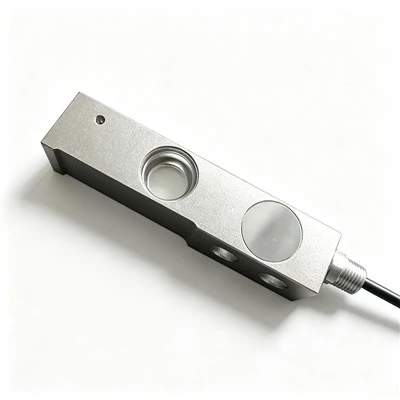
First, let’s define what a “bench scale” actually is, just to set a baseline. Unlike floor scales (which hold full pallets or heavy machinery) or portable scales (which you haul between jobs), a bench scale sits on a flat work surface, usually 12 to 24 inches wide, with a weighing platform, a display, and a way to store data or connect to other equipment. They’re built for small, frequent weighings: measuring ingredient batches for baked goods, checking the weight of finished screws, verifying that a 1-pound package has enough product inside. A good bench scale doesn’t just weigh things—it’s consistent, reliable, and built to stand up to the daily wear of a busy work environment.
At the low end, the $100 to $300 range gets you entry-level bench scales, and for some businesses, that’s more than enough. These are the scales you’ll find in a small bakery that weighs flour for artisanal loaves, or a craft shop that weighs resin or paint for custom projects. I remember a bakery in Portland that bought one of our $180 bench scales three years ago; they use it twice a day, and it’s never missed a beat. These models are usually constructed with plastic or thin aluminum, have a basic LED display that shows weight in pounds or grams, and a capacity between 10 and 50 pounds. They’re accurate enough for non-critical use—usually within 0.1 pounds, or about 1/16 of an ounce—and they’re easy to move if you need to shift your workbench around. The downside? They’re not designed for heavy, constant use. If you’re using a bench scale 40 hours a week, stacking heavy boxes on it, or needing to measure within a fraction of an ounce, these entry-level models might break down or drift in accuracy after a year or two. That’s fine for a small hobbyist or a part-time side business, but if you’re running a commercial operation, you’ll want to spend a little more.
Next, the mid-range: $300 to $1,200. This is the sweet spot for most small to mid-sized businesses, and it’s the category our customers buy from most often. These bench scales are built for consistent, daily use, with heavier-duty frames (usually stainless steel, which is rust-resistant and easy to sanitize—critical for food or pharmaceutical work) and a wider range of capacities. You’ll find models here with capacities from 50 to 500 pounds, accurate to within 0.01 pounds, which is perfect for tasks like weighing small metal parts, packaging small retail items, or portioning ingredients for a restaurant’s prep line. One of our regular customers, a contract packaging firm in Chicago, uses a $850 mid-range bench scale to weigh hundreds of custom gift boxes every day. They needed a scale that could handle 10-pound boxes, connect to their inventory software, and be accurate enough to avoid overfilling or underfilling orders—this model checks all those boxes. The features here go beyond basic weight display, too: many have Bluetooth to sync with phones or computers, a touchscreen display, and the ability to store preset weights for common items, so workers don’t have to type numbers in every time. These scales are built to last 5 to 10 years with regular use, and they’re calibrated easily, which saves you time on maintenance. The reason this range is so popular is because it balances performance and cost: you’re not paying for industrial-grade features you don’t need, but you’re also not buying a scale that will fail when you have a deadline to meet. If you’re a small manufacturer, a food processing plant with a 10-person team, or a shipping warehouse that processes 50 packages a day, this $300 to $1,200 range is where you’ll find the best value.
Then there’s the high-end industrial bench scale, which starts at $1,200 and can go well over $5,000. These are the workhorses for heavy, high-volume operations: auto parts factories, pharmaceutical manufacturing lines, large distribution centers that process thousands of packages a day. These scales are built with industrial-grade stainless steel, heavy-duty load cells that can handle up to 2,000 pounds (though most are 500 to 1,000 pounds for bench use), and accuracy within 0.001 pounds. That level of precision matters here: if you’re weighing tiny auto components like screws or bolts, even a 0.01-ounce error can add up to thousands of dollars in wasted materials, or lead to products that don’t fit together correctly. One of our industrial clients is a gear manufacturer in Detroit; they use a $3,200 high-end bench scale to weigh individual gears before they’re assembled into transmissions. If a gear is even a few ounces underweight, it’s a sign of a flaw in production, so that scale’s extreme accuracy is non-negotiable. These models also have heavy-duty displays that can be mounted on a wall away from the work area, so workers don’t have to reach over heavy parts to read the weight, and they’re compatible with automated systems: conveyor belts, bar code scanners, and inventory management software. They’re also weather-resistant and can handle spills, dust, and constant vibration from factory equipment, which is a must for a shop that runs 24/7. The lifespan of these scales is 10 to 20 years, if not more, so while the upfront cost is high, they save money in the long run by reducing downtime, minimizing errors, and needing less frequent calibrations.
Now, it’s important to note that these ranges aren’t set in stone. There are factors that can push a bench scale’s price up or down, even within these brackets. For example, calibration is a big one: many entry-level scales come pre-calibrated, but industrial or food-grade models might require professional calibration, which adds a one-time cost of $100 to $200. Add-ons also matter: if you need a platform made of food-safe stainless steel (instead of the cheaper aluminum), that can add $100 to $300. If you need Bluetooth connectivity or a way to print weight labels, that’s another $50 to $200. And if you’re in a regulated industry like pharmaceuticals or food processing, you might need a bench scale that meets ISO or FDA standards, which will cost more than a standard commercial model.
I’ve seen too many businesses make the mistake of buying the cheapest bench scale they can find, only to have it fail when they need it most. Last year, a small e-commerce shop bought a $120 entry-level scale to weigh 50 packages a day. After three months, the scale started drifting—one day it would show a package as 1 pound, the next as 1.1 pounds—and they had to re-weigh every package, costing them extra labor and even a few angry customers who received underweight orders. If they’d spent $400 on a mid-range scale, they would’ve had a consistent tool that kept up with their workflow. On the flip side, I’ve also seen businesses waste money on an industrial bench scale when they only needed a basic model. A craft brewery in Denver bought a $2,500 industrial scale to weigh malt for small-batch beers, and they never used half the features—all they needed was a scale that could measure 50 pounds accurately. It’s a $2,100 mistake they still talk about, because they could’ve put that money toward new brewing equipment instead.
So how do you figure out which range is right for you? Start by asking yourself three questions: How much weight will I be measuring, on average? How often will I use the scale? And how accurate do I need to be? If you’re a part-time crafter weighing small items a few times a week, $100 to $300 is perfect. If you’re a small business running daily weighings for products between 10 and 500 pounds, $300 to $1,200 is your sweet spot. If you’re an industrial operation needing extreme precision and constant use, $1,200 and up is where you’ll find the durability and performance you need.

At the end of the day, a good bench scale isn’t just a price tag—it’s an investment in your workflow. A reliable scale reduces errors, saves time, and prevents costly mistakes. Whether you’re just starting out and need something basic, or you’re scaling your business and need a tool that grows with you, there’s a bench scale in the right price range for your needs. If you’re still not sure which option fits your operations, reach out to discuss your requirements—we can walk you through the best choices for your budget and use case.
Electronic Truck Scale REFERENCES
National Conference on Weights and Measures. (2022). Bench Scale Performance Standards.
Food and Drug Administration. (2021). Equipment Calibration Guidelines for Food Manufacturing.
Small Business Administration. (2020). Cost-Benefit Analysis of Industrial Measurement Tools.
Journal of Manufacturing Technology. (2019). Durability and Longevity of Commercial Bench Scales.
Shanghai Eagle Brand Weighing Apparatus Co., Ltd.
As one of the most professional bench scale manufacturers and suppliers in China, we’re featured by quality products and good service. Welcome to wholesale advanced bench scale in stock here and get pricelist from our factory. We also accept customized orders.
Address: No. 124, Group 1, Baqiao, Wangjiawei, Zhelin Town, Fengxian District, Shanghai
E-mail: 13386116000@163.com
WebSite: https://www.cneaglebrand.com/
