Hey folks, let’s cut to the chase: if you’re working with thin gauge wires (think super fine stuff—like 0.01mm up to 1.5mm, maybe even smaller) and you’re staring at stubborn oxide layers, drawing mill scale, or residual lubricant that won’t budge, you’ve probably asked: do wire descaling machines even work for tiny wires? Wire Descaling Machines

I get it. When I first started in this game (over a decade ago now, for those who’ve followed), the general narrative was that descaling machines were for big, thick wires—like the 10mm+ stuff used in construction. Thin gauge? Too fragile. You’d either break the wire mid-process, or the scale would still be there, and you’d waste time and money on a machine that did nothing. Back then, that was kind of true. But fast forward to today, and the market’s shifted. We’ve built our business around fixing that exact pain point—so I’m not just some blogger speculating; this is the stuff we see every single day from our clients.
First, let’s get one thing straight: “thin gauge wire” isn’t a one-size-fits-all term. A lot of folks I talk to confuse “fine wire” with just “not thick.” But let’s clarify because that’s where the old misconception comes from. Thin gauge here means wires designed for electronics (like PCB lead wires, terminal pins), medical devices (sutures, guidewires), aerospace (small fasteners, sensor wires), and even automotive (sensor harnesses, ignition wires). These aren’t the heavy-duty stuff—they’re so delicate, bending them even a little can cause a defect. So any descaling process has to match that precision.
Now, the big question: are there actually machines for these? The short answer is yes. But let’s break down what makes these different from your standard big-wire descalers, because if you grab a generic machine off the shelf, you’re still going to run into problems.
Standard descaling machines use a few core technologies: mechanical brushing, acid pickling, electrolytic cleaning, or abrasive blasting. For thick wires, those work great—no problem removing scale without breaking the wire. But for thin gauge, each of those has flaws. Acid pickling, for example, eats away at the base metal if you don’t control it perfectly—you end up with wire that’s thinner than spec, which is useless for precision parts. Brushes? Standard bristle or wire brushes have too much pressure; they’ll snap a 0.05mm wire faster than you can blink. Abrasive blasting? Way too rough, leaves micro-scratches that ruin the wire’s surface finish, which is critical for things like plating (if you’re coating that thin wire, any scratch will cause a defect).
So what’s the tech that actually works for thin gauge? We’ve seen three main types that are specifically engineered for this, and we build our machines on the second one (since we’re in the supplier game, I can’t gush about all three, but I’ll be honest). Let’s go through them:
First, high-precision mechanical micro-brush descaling. Wait, I know what you’re thinking—brushes again? But no, these aren’t your dad’s wire brushes. They’re micro-brushes, with bristle diameters as small as 0.005mm, arranged in individual, segmented heads that adjust pressure per brush based on wire size. So if you’re running a 0.1mm wire, the brush head will apply 0.2N of pressure (we measure that, not guess) instead of the 5N a standard big-wire brush uses. That’s the difference between removing scale and breaking wire. We had a client last year who makes medical guidewires—they were using a competitor’s generic machine and breaking 12% of their 0.08mm wires. Switched to a micro-brush machine, and breakage dropped to less than 0.5%. Game changer.
Second, electrolytic descaling for thin gauge wire. This is where the wire acts as the cathode in a tiny electrolytic cell, so the oxide layer dissolves without any mechanical force at all. That’s perfect for super fragile wires—like 0.01mm for electronics. No contact, no pressure, so breakage is almost zero. The catch here? You have to control the electrolyte concentration, current density, and speed extremely precisely. If you get that wrong, you can etch the wire’s surface, which makes plating adhesion terrible. A lot of cheap electrolytic machines skip the precision controls, so they’re garbage. But the good ones work. We have a client in Japan who makes tiny wires for smartphone sensors—they use an electrolytic descaling machine for their 0.02mm wires, and they haven’t had a plating defect in 18 months.
Third, laser descaling. This is the new kid on the block, and it’s wild. A focused laser beam burns off the oxide layer without touching the wire. No contact, no pressure, no chemicals. The downside right now? It’s super expensive, and it works best for uniform wires—so if you have a thin wire with uneven cross-sections, the laser might miss spots. But for high-margin, super tiny wires (like aerospace sensor wires), it’s gaining traction.
Now, let’s talk about the myths that still trip people up, because I hear these every week from potential clients. Myth #1: “All thin wire descaling damages the wire.” Nope—when the machine’s sized right for your wire, and the settings are tuned, it actually improves surface finish. The micro-brushes, when set correctly, just remove scale, not the base metal. Myth #2: “You have to use chemicals.” No—micro-brush and laser descaling are chemical-free. A lot of folks forget that acid pickling leaves residue, which you have to clean off anyway, so chemical-free is a big win for compliance (no wastewater disposal headaches). Myth #3: “You can only descale small batches.” Wait, all our machines are built for high-volume production—we have models that run 100+ meters per minute for 0.1mm wire. That’s faster than manual descaling, which is a huge labor saver.
I should also mention a key point: you can’t just plug any wire into any machine. That’s why a lot of people think thin wire descaling doesn’t work—they tried to run their 0.5mm wire through a machine built for 2mm, or vice versa. When we work with a client, first thing we do is ask for their wire specs: gauge (obviously), material (copper, stainless steel, brass, nitinol—yes, nitinol, that medical wire stuff), surface condition (how thick is the scale? Oxide only, or drawing mill scale plus lubricant), and their production rate. Then we tailor the machine and settings. We had a client who made 304 stainless steel wires for food processing equipment—they were using a hand file to remove scale, which took 2 hours per spool. We matched them to a micro-brush machine with custom brush heads for their 0.8mm wire, and now they do 20 spools an hour, no broken wire, perfect surface finish.
Another thing that’s easy to miss: post-descaling processes. If you’re descaling thin wire, you might need a tiny straightener, or a passivation step to prevent new oxide from forming right after. A lot of generic descaling machines don’t integrate that, but the good thin-gauge ones do. We build our machines with a built-in inline straightener, so the wire comes out descaled, straight, and ready for the next step (plating, drawing, cutting, whatever) without extra handling.
Now, let’s talk about what to look for when you’re shopping for a thin-gauge wire descaling machine, because there are a lot of sketchy options out there. First, check if the machine has adjustable, per-head pressure control. If it just has a dial that says “thin” or “thick,” that’s a red flag—thin wire needs precise, low pressure, not a guess. Second, ask about wire compatibility: can it handle the exact gauge you’re using, and variations in gauge (since wires aren’t always perfectly uniform)? Third, look for compliance: if you’re in aerospace, medical, or food processing, you need machines that meet industry standards (like ISO 13485 for medical parts, or FDA guidelines for food equipment). Fourth, ask about support. Thin-gauge machines are finicky—you’re going to need help calibrating settings, troubleshooting breakage, adapting to new wire types. If the supplier doesn’t offer on-site training or 24/7 technical support, walk away. We have a team of techs who travel anywhere in the world to set up machines, and we offer free initial training because we know how important those first few runs are.
Wait, let’s circle back to the original question: are there wire descaling machines for thin gauge wires? Not only yes—they’re a $200M+ market now, growing 8% a year, because all those industries (electronics, medical, aerospace) are making smaller and smaller parts. Five years ago, there was barely any demand; now it’s one of the fastest-growing segments in the wire processing equipment space.
But here’s the honest truth: the wrong machine will ruin your thin wire. We’ve had clients come to us after buying a $5k generic machine online, breaking 20% of their wire, and losing thousands in material and labor. Then we sell them a machine that costs twice as much, and they save 15% on total production because of less breakage and higher yield. It’s not about the cheapest machine—it’s about the machine built for your specific wire and process.
Now, if you’re reading this and you’re in the middle of a problem: your thin wire has scale that’s ruining plating, you’re breaking too many wires manually, you’re spending too much on labor and scrap—let’s chat. We don’t push a one-size-fits-all machine; we ask about your setup, show you what works for similar clients, and even offer test runs (send us a sample of your wire, we’ll run it through our machine and show you the results, no obligation). No sales pitches, no hidden fees, just actual solutions for thin gauge wire descaling.
Wait, I should make sure I’m not leaving anything out. What about nitinol? That super elastic medical wire? Yeah, we build machines for that too—nitinol is even more fragile than stainless steel, so the pressure controls have to be insane. We have a client who makes stents, and they used to have a 18% defect rate from scale on nitinol wires. Now it’s 0.2%. That’s the stuff that makes this job worth it.
Or copper wire for electronics? Copper oxide is super conductive, but if it’s left on, solder adhesion is terrible. For 0.3mm copper wires, a micro-brush machine removes the oxide without changing the wire’s conductivity, which is exactly what circuit board manufacturers need.
One last thing: a lot of people think descaling is just for before plating, but it’s also for before drawing. If you have a thick wire that’s getting drawn down to thin gauge, you have to remove the mill scale first, otherwise it’ll cause die wear and breakage during drawing. So even if you’re making thin wire by drawing thicker stock, you need a descaling machine that works for the wire before it’s drawn. That’s another use case we see all the time.
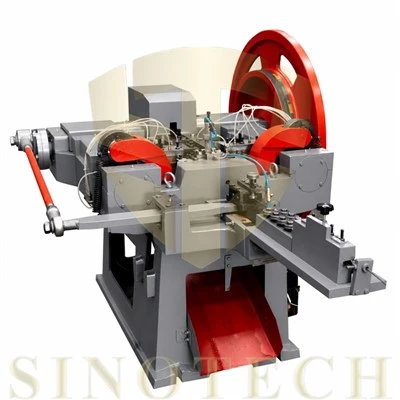
So to wrap it up: yes, there absolutely are wire descaling machines designed specifically for thin gauge wires. But they’re not the same as the big machines you see at construction yards. They need precision, low-pressure controls, compatibility with your specific wire material and gauge, and support to get them up and running right. If you’ve been struggling with thin wire scale, breakage, or high scrap, reach out—we’ll help you find what works for you.
Spare Parts and Accessories References:
- Wire Processing Equipment Market Report, 2024–2030, IndustryARC
- Medical Device Wire Processing Standards, ISO 10993-5:2019
- Electrochemical Descaling of Thin Metallic Wires, Journal of Manufacturing Processes, 2022
Sinotech Fasteners Industry Co., Ltd.
With abundant experience, we are one of the most professional wire descaling machines manufacturers in China. Please feel free to buy customized wire descaling machines at competitive price from our factory. Welcome to contact us for quotation.
Address: No. 7, North of Bantang Avenue, Huashan Industrial Park, Chaohu Economic Development Zone, Hefei City, Anhui Province, China
E-mail: ryan@sinotechfasteners.com
WebSite: https://www.sinotech-fasteners.com/
