Hey there, I’m Jake, and for the past 12 years, I’ve worked hands-on with pipe extrusion lines—first as a line operator, then as someone who helps customers figure out exactly what their equipment can produce. One question I get asked more than any other is: “What types of pipes can a pipe extrusion line actually make?” It’s not a one-size-fits-all answer, honestly. Over the years, I’ve seen lines that turn out simple garden hoses and lines that churn out massive HDPE pipes for water mains, all on the same core setup with a few adjustments. Today, I’m breaking down the most common (and most useful) pipe types our lines produce, plus what tweaks let us customize for specific jobs. Pipe Extrusion Line
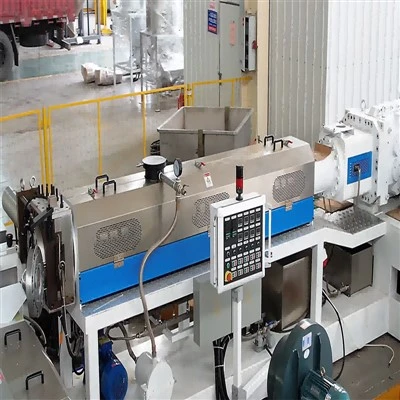
Let’s start with the basics. A pipe extrusion line doesn’t just spit out plastic—It melts plastic resin, forces it through a shaped die, cools it, and cuts it to length. The resin type, die design, cooling system, and line speed all change what comes out. Most of our customers are in construction, agriculture, or municipal infrastructure, so we tailor lines to their needs, but there’s a standard set of pipe types that are non-negotiable for modern projects.
First up: PVC pipes, or Polyvinyl Chloride. This is probably the most common pipe you’ll see anywhere—from residential drain lines to municipal sewer mains. The reason PVC is so popular? It’s cheap, durable, and resistant to corrosion, which is way better than metal pipes that rust over time. There are two main types of PVC our lines produce, and they’re not interchangeable. PVC-U (Unplasticized PVC) is the rigid stuff, used for water supply, drainage, and sewer lines. It doesn’t bend easily, so it needs to be cut to exact lengths and connected with special fittings. We also make PVC-C (Chlorinated Polyvinyl Chloride), which is heat-resistant. That’s the pipe you’ll find in hot water supply lines for homes and offices, since it can handle temps up to around 180°F without warping. When running PVC, the big thing to watch is the die temperature—too high, and the resin degrades, leading to brittle pipes that crack under pressure. Our lines have automated temperature controls that fix that issue, so even new operators can get consistent results.
Next, HDPE pipes, or High-Density Polyethylene. This is the workhorse for a lot of heavy-duty projects. If you’ve ever seen a new water main being laid down a street, that’s almost always HDPE. Why? It’s flexible (well, more flexible than PVC, anyway) so you can pull long sections through trenches without joints, which cuts down on installation time and leak points. HDPE is also corrosion-resistant, lightweight, and has great pressure-holding capacity—we can make HDPE pipes rated for up to 200 psi, which is way more than most residential needs. We also produce MDPE pipes, which is Medium-Density Polyethylene, a step down from HDPE. MDPE is mostly used for gas lines and underground water service lines to individual homes; it’s a little less strong than HDPE but more flexible and cheaper for smaller jobs. One cool thing about HDPE lines is that we can add color strips to them right in the extrusion process. For example, blue HDPE is for potable water, black is for sewer or gas, and sometimes yellow stripes mark gas lines so utility crews can spot them easily. Our lines have an optional color extruder that feeds the striping material, so you don’t have to do a separate process later.
Then there’s PEX pipes, or Cross-Linked Polyethylene. This is the stuff you see inside homes for radiant heating and cold water lines. Cross-linking means the polyethylene molecules are chemically bonded, so it’s more heat-resistant and durable than regular HDPE. PEX is flexible, too—so much so that you can snake it through wall cavities without needing as many fittings as rigid PVC or copper. We produce two main types of PEX: PEX-A, which has the highest cross-linking level, making it the most flexible and durable, and PEX-B, which is a little less cross-linked but cheaper to produce. Most of our residential customers go with PEX-B for everyday hot and cold lines, while commercial jobs sometimes use PEX-A for longer runs. One thing to note: PEX needs a specific cooling process because cross-linking happens after extrusion, so our lines have a post-extrusion treatment tank that exposes the pipe to steam or hot water to complete the cross-linking. That’s a key step we don’t skip, because cutting that corner leads to pipes that fail prematurely under pressure.
Let’s not forget PP pipes, or Polypropylene. This one is similar to PVC but lighter and more chemical-resistant. PP is mostly used for industrial applications—like transporting chemicals in factories, or in agricultural irrigation systems where water has fertilizers or other additives. It’s also used for some low-pressure hot water lines, especially in Europe where it’s more common than PVC for that use. We make both homopolymer PP and copolymer PP. Homopolymer PP is stiffer, used for things like drainage pipes. Copolymer PP is more flexible and impact-resistant, so it works better for buried lines that might get hit by heavy equipment during installation. The main difference in extrusion for PP is the melting temperature—it melts at a higher temp than PVC, so our extruders have higher temperature settings and different screw designs to handle that, which is a simple adjustment once you know the resin.
Now, beyond the standard single-layer pipes, our lines also produce multi-layer pipes, which are becoming more popular for high-performance jobs. A lot of customers need pipes that do more than just carry water—they need to resist oxygen, or block chemicals, or hold up to extreme temps. Multi-layer pipes have 3 to 5 layers, each with a different material. For example, a common multi-layer pipe for potable water has a core of EVOH (Ethylene Vinyl Alcohol) which blocks oxygen, so it prevents corrosion in metal parts connected to the pipe. Or we can make a pipe with a HDPE outer layer for strength, a PP middle layer for chemical resistance, and a PVC inner layer for smooth flow (less buildup of sediment over time). Running multi-layer pipes requires a co-extruder, which is an extra unit attached to the main line that feeds the different materials at the right ratio. Our lines are built with modular co-extruders, so customers can add that feature later if their needs grow—they don’t have to buy an entirely new line.
We also make specialty pipes, which are more niche but super important for specific projects. For example, corrugated pipes. Corrugated pipes have ridges along the outside, which makes them much stronger than smooth pipes of the same thickness, so they can handle heavy loads from soil above when buried. We make corrugated PVC and HDPE pipes for drainage, stormwater management, and culverts under roads. The corrugation is formed by a rotating die that shapes the pipe as it cools, which is a custom part we design for each customer’s required corrugation size. Another specialty pipe we produce is conduit pipes, which are used to protect electrical wires underground or inside walls. Conduit pipes are usually PVC or HDPE, rigid enough to hold their shape but easy to cut and fit with connectors. We also make flexible conduit for tight spaces, like running wires through walls where rigid pipe would be hard to maneuver.
Wait, I should mention what affects what a line can produce. It’s not just the line itself, but the components. For example, if a customer only makes small-diameter pipes for garden hoses or electrical conduit, they might go with a line that has a small extruder and a narrow die. If they make large-diameter HDPE pipes for water mains (some of those are up to 48 inches wide!), they need a heavy-duty extruder, a huge die, and a cooling tank big enough to handle the pipe size. Our team works with each customer to figure out exactly what they need—do they mostly do residential plumbing pipes, or municipal infrastructure, or industrial applications? That dictates the line’s size, components, and even the type of controls.
I’ve seen a lot of customers make the mistake of buying a line that’s too big for their current needs, only to outgrow it in a year. That’s why our lines are modular—you can upgrade components as your business grows. For example, if you start with a line that makes PVC and small HDPE pipes, you can add a co-extruder later to make multi-layer pipes, or upgrade the cooling system for larger diameter pipes. That’s a big plus for small to medium businesses that are scaling.
Over the years, I’ve also learned that the pipe quality depends more on process than the line itself. Even a good line will make bad pipes if the temperature is off, the cooling is uneven, or the line speed is too fast. Our lines have automated monitoring systems that track temperature, pressure, and line speed in real time, which reduces human error and makes consistent pipes. For example, if the die temperature drops too low, the system alerts the operator, so they can adjust it before bad pipes are produced. That cuts down on waste, which is a huge cost saver for our customers.
Let’s talk about a recent project I worked on to make this real. A municipal client wanted to replace old metal water mains in a small town. They needed HDPE pipes from 12 to 24 inches in diameter, plus smaller 6-inch pipes for service lines to homes. We modified one of our standard HDPE extrusion lines to include a large co-extruder for the outer UV-resistant layer (since pipes buried deeper still get some sunlight that can degrade HDPE over time) and added a color striping system to mark potable water. The line was able to switch between sizes in about an hour, with minimal downtime, and the pipes they’ve produced have been holding up perfectly for the past two years. That’s the kind of customization we do, not just selling a line and walking away.
Now, if you’re a contractor, a municipal worker, or a business looking to start (or expand) pipe production, the first step is to figure out exactly what pipes you need to make. Don’t just go for the biggest line—think about your current and future projects. Do you need to make small residential plumbing pipes, or large infrastructure? Single-layer or multi-layer? PVC, HDPE, or PP? Our team can walk you through all the options, show you sample pipes, and help you design a line that fits your budget and production needs.
If you’re ready to chat about your project, we’re here to help. No pushy sales pitches, just real advice from people who’ve been in the pipe extrusion business for years, and know what works (and what doesn’t) for different applications. Reach out to start a conversation about what your pipe extrusion line can produce, and how we can help you get the right equipment for your needs.
Pelletizing Line References
Plastic Extrusion: Principles and Practice, Hanser Gardner Publications
PVC Pipe Manufacturing Process and Applications, American Chemistry Council
HDPE Pipe Installation and Performance Guidelines, Plastics Pipe Institute
Cross-Linked Polyethylene (PEX) for Plumbing, International Association of Plumbing and Mechanical Officials
Zhejiang Jwell Pipe Equipment Co., Ltd.
As one of the most professional pipe extrusion line manufacturers and suppliers in China, we’re featured by quality products and good price. Please rest assured to buy cheap pipe extrusion line in stock here from our factory. Customized orders are welcome.
Address: No.128 Qingfeng Road, Xieqiao Town, Haining City, Jiaxing City, Zhejiang Province
E-mail: salaa@jwell.cn
WebSite: https://www.jwell-pipe.com/
