Can a thread repair kit be used on metal threads in corrosive environments? Thread Repair Kit
As a supplier of thread repair kits, I often get asked about the applicability of our products in various situations. One common question that stands out is whether our thread repair kits can be effectively used on metal threads in corrosive environments. In this blog post, I’ll delve into the science behind it, the properties of our products, and offer some practical insights.
Understanding Corrosive Environments
Corrosive environments are characterized by the presence of substances that can cause chemical reactions leading to the deterioration of metal. These environments can vary widely, from industrial settings with high levels of acids, alkalis, or salts, to outdoor marine environments where saltwater is a constant threat. Corrosion is an electrochemical process where metal reacts with its surroundings, losing electrons and gradually degrading. This can lead to the weakening and eventual failure of metal components, especially those with threaded connections.
How Thread Repair Kits Work
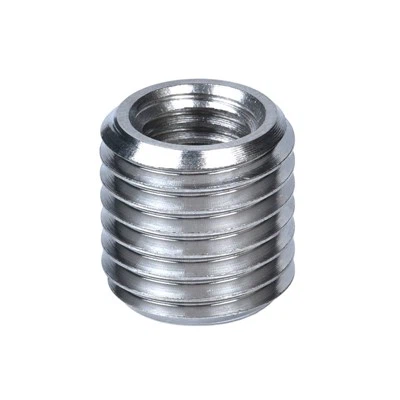
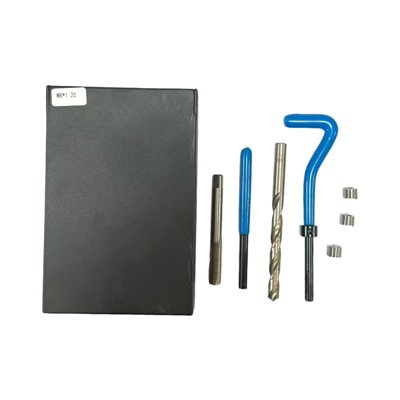
Our thread repair kits are designed to restore damaged or worn threads to their original functionality. They typically consist of a set of tools and a repair medium, such as inserts or epoxy compounds. The inserts are usually made of high – strength materials like stainless steel or brass, which are chosen for their mechanical properties and ability to create a new, reliable thread within the damaged one.
The epoxy compounds, on the other hand, are formulated to fill in the gaps and form a strong bonding with the existing metal threads. They harden over time, creating a durable thread surface. The process of using these kits involves cleaning the damaged threads, optionally re – tapping the hole to a specific size, and then installing the insert or applying the epoxy compound according to the manufacturer’s instructions.
Suitability for Corrosive Environments
Whether our thread repair kits can be used in corrosive environments depends on several factors.
Material Compatibility
The first and most crucial factor is the material of the repair kit components. As mentioned earlier, we use high – strength materials like stainless steel and brass for our inserts. Stainless steel is known for its excellent corrosion resistance, especially in the presence of mild to moderate corrosive agents. It contains chromium, which forms a passive oxide layer on the surface, preventing further oxidation and corrosion.
Brass, on the other hand, has good corrosion resistance in certain environments, particularly when protected from aggressive chemicals. However, in highly corrosive environments such as those with strong acids or chlorides, brass may not be the best choice. Our epoxy compounds are also formulated to be resistant to a range of chemicals. They are designed to adhere well to metal surfaces and provide a barrier against corrosive substances.
Sealing and Protection
Another important aspect is the ability of the repair to provide a seal against corrosive agents. When using our inserts, proper installation is key. If the insert is installed correctly, it can create a tight fit within the damaged thread, preventing the ingress of corrosive substances. Our epoxy compounds, when applied properly, can also act as a sealant, filling in the gaps and preventing moisture and chemicals from reaching the underlying metal.
However, it’s important to note that no repair is completely immune to corrosion. Over time, even the most corrosion – resistant materials can be affected by extremely harsh environments. Regular inspection and maintenance are essential to ensure the long – term integrity of the repaired threads.
Surface Preparation
Proper surface preparation is vital for the success of any thread repair in a corrosive environment. Before using our thread repair kit, the damaged threads must be thoroughly cleaned. This involves removing any rust, debris, or existing corrosion products. Failure to do so can prevent the repair medium (insert or epoxy) from bonding properly, reducing the effectiveness of the repair and increasing the risk of further corrosion.
Case Studies
To illustrate the effectiveness of our thread repair kits in corrosive environments, let’s look at a couple of real – world examples.
Industrial Chemical Plant
In an industrial chemical plant, there were several metal pipes with damaged threads due to exposure to corrosive chemicals. Our team recommended using our stainless – steel inserts for the repair. After proper surface preparation, the inserts were installed, and the pipes were put back into service. Over a period of two years, regular inspections showed that the repaired threads remained in good condition, with no signs of further corrosion or loosening.
Marine Application
On a fishing vessel, the threaded connections on the engine components were corroded due to constant exposure to saltwater. We provided an epoxy – based thread repair kit. After cleaning the damaged threads and applying the epoxy, the components were reassembled. The vessel has been in operation for over a year, and the repaired threads have held up well, with only minor surface corrosion that can be easily managed.
Limitations
While our thread repair kits offer a viable solution for many situations in corrosive environments, there are limitations.
Extreme Corrosion
In cases where the corrosion has reached a severe stage, such as when the metal is severely pitted or has lost a significant amount of its cross – sectional area, repair may not be sufficient. In such cases, replacement of the entire component may be the only option.
Unusual or Highly Aggressive Chemicals
There are some highly specialized and aggressive chemicals that can corrode even the most corrosion – resistant materials used in our kits. In these extreme situations, additional protective measures or alternative materials may need to be considered.
Conclusion
In conclusion, our thread repair kits can be used on metal threads in corrosive environments, provided that the right materials are chosen, proper surface preparation is carried out, and the repair is installed correctly. While they offer a cost – effective and efficient solution for many cases, it’s important to understand their limitations and to perform regular inspections and maintenance.
Thread Repair Kit If you are facing issues with damaged threads in corrosive environments and are considering a thread repair solution, I encourage you to reach out to us. Our team of experts can provide you with detailed advice on the most suitable product for your specific situation. We are committed to helping you find the best thread repair solution to ensure the reliability and longevity of your metal components.
References
- ASTM International. (Year). ASTM standards related to corrosion testing and materials selection.
- ASM Handbook Committee. (Year). ASM Handbook Volume 13A: Corrosion: Fundamentals, Testing, and Protection.
Locking Inserts Technologies Co., Ltd.
As one of the most professional thread repair kit manufacturers and suppliers in China, we’re featured by quality products and good service. Please rest assured to wholesale bulk thread repair kit in stock here from our factory. Also, custom service is available.
Address: 205, 2/F, Bldg. A8, Zhizaogu Ind. Park, No.26 Xingye 5th Rd, Bao’an Dist., Shenzhen, Guangdong, P.R.China
E-mail: sales@lockinginserts.com
WebSite: https://www.lockinginserts.com/
