If you’ve ever stood in a busy warehouse at 2 a.m., watching three forklifts line up to load orders and only one has a charged battery, you’ve probably daydreamed about stringing a few extra battery packs together to keep the whole shift moving. As a forklift battery supplier, I get this question all the time: “Can I connect multiple forklift batteries in parallel?” The short answer is yes—but only if you do it right. I’ve seen too many warehouse managers try to skip the fine print, save a few dollars on a “quick fix,” and end up with a dead battery bank, downtime, or even a safety hazard that costs way more than the time they thought they’d save. Today, I’m breaking down what actually works, what to avoid, and how to approach parallel connections if you’re considering them for your fleet. Forklift Battery
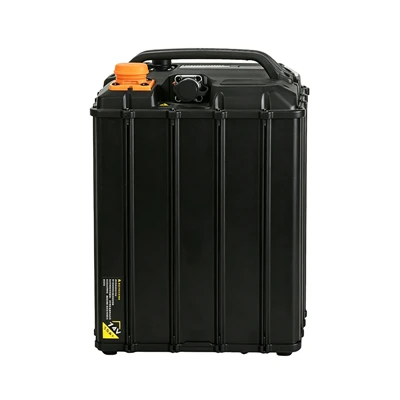
First, let’s get the basics straight, because forklift batteries aren’t your standard car battery. Most industrial forklifts run on deep-cycle lead-acid (flooded or absorbed glass mat, AGM) or lithium-ion batteries, designed to deliver consistent power over long, slow discharges—not short, high bursts like a car’s cranking battery. Parallel connections mean linking the positive terminal of one battery to the positive of another, and the negative to the negative, so they share the total electrical load. This is different from series connections, where you stack batteries end-to-end to increase voltage, which is what you’d do to get a 48V forklift from two 24V batteries. Parallel is for increasing amperage, which translates to longer run time for your forklifts. That part sounds straightforward, right? But here’s where things go off the rails: not all batteries are created equal, and mismatched packs will cause problems faster than anything else.
Let’s talk about why parallel connections are even a consideration in the first place. Say you run a 10-warehouse operation, each with five sit-down forklifts, and half your team needs to run double shifts during peak season. If each forklift takes an 80V battery with a 500Ah capacity, one battery will power it for roughly eight hours on a single charge. But if you only have a handful of charging stations, a parallel setup lets two 500Ah batteries act as a single 1000Ah pack, giving you 16 hours of run time without needing to swap batteries mid-shift. That’s a huge win for productivity—if you match the batteries correctly. I once worked with a 3PL provider in Cincinnati who tried to pair a 2-year-old flooded lead-acid battery with a brand-new lithium-ion pack to get extra run time. Within three months, the old battery was dying 20 minutes into each shift, the lithium battery was overcharging constantly, and they had to replace three chargers. The issue? Even though both were rated 80V, their internal chemistry, state of charge (SoC), and internal resistance were drastically different. When you connect two mismatched batteries in parallel, the one with higher voltage (or lower internal resistance) will push current to the other, essentially turning it into a load instead of a power source. That’s called circulating current, and it wastes power, generates heat, and shortens the lifespan of both batteries faster than over-discharging.
So what does make a parallel connection safe and effective? Let’s start with matching every key specification. First, voltage must be identical—no exceptions. A 48V battery will never play nice with a 51.2V lithium battery, even if they’re both forklift-specific. Next, capacity (Ah) should be as close as possible, ideally within 10% of each other. If you have a 500Ah battery, pairing it with a 550Ah or 450Ah pack works, but a 700Ah and 300Ah? Forget it. Then there’s state of charge. Even if voltage and capacity are close, if one battery is at 100% charge and the other is at 50%, you’ll get that same circulating current as the mismatched aged and new battery. We always recommend equalizing the charge (for lead-acid) or running both to a 50% SoC before connecting them in parallel. That’s a quick step, but it’s one that 70% of the warehouse teams I talk to skip, and it leads to avoidable failures.
Internal resistance is another big one, especially with lithium-ion batteries. Lithium packs from different manufacturers, or even different batches from the same manufacturer, can have slightly different internal resistance, which affects how they share the load. For lead-acid batteries, this can be even more of an issue for flooded packs, as sulphation builds up over time and increases internal resistance unevenly. That’s why we rarely recommend parallel connections for mixed battery types, or for old batteries that have had a lot of cycles. If your fleet has a mix of 3-year-old and 1-year-old batteries, putting them in parallel is a gamble. We’ve seen lead-acid banks last 2 years with proper parallel matching, but only if all packs are the same age, same model, and have been maintained consistently. Lithium-ion is a bit more forgiving, but again, only if the specs line up.
Now, let’s get into the practical side of installation, because even matched batteries can go wrong if you wire them incorrectly. First, you need the right gauge of cable. If you’re connecting two 500Ah batteries in parallel, the cable between them can’t be too thin—you need to handle the extra current that flows between the packs during charging and discharging. We’ve seen teams use 10-gauge cable for a setup that required 4-gauge, which caused the cable to overheat, melt the insulation, and create a fire hazard. It’s not just the cable between the batteries, either: the main cable from the combined parallel bank to the forklift motor needs to be sized for the total combined current, not just a single battery. If you use a 200Ah cable for two 500Ah packs, you’ll cause voltage drops that slow down the forklift, reduce run time, and put extra stress on the motor.
Another critical installation step is adding a fuse or circuit breaker for each individual battery in the parallel bank. If one battery short-circuits, the other batteries in parallel will dump all their current into the bad pack, leading to a thermal runaway or explosion if there’s no protection. I can’t stress this enough: never wire parallel batteries without individual overcurrent protection. A lot of guys think “it’s just a battery, it’s not that powerful,” but a 500Ah forklift battery can deliver thousands of amps in a short circuit. We’ve had a customer in Detroit skip this step, and a faulty cell in one battery caused the whole parallel bank to arc and burn through a pallet rack—costing them $12,000 in damage and 3 days of downtime. That’s the kind of mistake that makes all the time you save on no mid-shift swaps not worth it.
Charging is another part of parallel setups that most teams overlook. Standard forklift chargers are calibrated for a single battery, but when you connect two in parallel, you need a charger that can handle the combined capacity, or you need to adjust the charging settings. For example, if two 500Ah batteries make a 1000Ah bank, the charger should be rated for at least 100A charging current (the standard is 10% of Ah for lead-acid, so 1000Ah would be 100A). If you use a 50A charger for a 1000Ah parallel bank, it’ll take twice as long to charge, and you’ll risk overcharging the smaller or weaker pack while the other never reaches full capacity. For lithium-ion parallel banks, this is even more precise—you need a charger with built-in balancing capability, which monitors each individual battery’s SoC and voltage during charging to make sure they all charge evenly. We always recommend pairing a parallel setup with a smart charger designed specifically for multi-battery packs; generic chargers just don’t cut it.
Wait a second—if parallel setups are so much work, why would anyone bother? Let’s weigh the pros and cons, because it’s not for every operation. The biggest pro is increased run time without needing extra forklifts or charging stations. For example, a small beverage distributor with 4 forklifts running 12-hour shifts during harvest season can get away with 6 batteries in parallel, instead of buying 12 batteries and 6 charging stations, saving tens of thousands of dollars upfront. Parallel setups also reduce battery swap frequency, which cuts down on labor costs—forklift operators spend an average of 15 minutes per shift swapping batteries, so a parallel setup can add up to hundreds of hours of productivity per year.
But the cons are real, and they’re not just hypothetical. The main downside is increased maintenance. You have to check each battery’s SoC every week, equalize charge lead-acid packs monthly, inspect cables for wear, and test fuses quarterly. If you’re working with old or mismatched batteries, the maintenance burden gets even heavier. There’s also the risk of downtime if one battery in the parallel bank fails—you can’t just swap a single battery without disconnecting the whole bank, so you might have to take a forklift out of service until you replace the bad pack. For smaller operations with 2-3 forklifts, it’s often cheaper to just buy an extra battery and a second charger than to deal with the maintenance and risk of a parallel setup.
So what’s our take as a forklift battery supplier? If you’re considering parallel connections, here’s our step-by-step guide to doing it right, no matter if you use lead-acid or lithium-ion. First, do a full audit of your current batteries: check their voltage, capacity, cycle count, and SoC for all packs you want to pair. Only pick batteries that are within 10% of each other on capacity, same voltage, same type (no mixing lead-acid and lithium-ion, no mixing flooded and AGM), and less than 200 cycles apart (for lithium) or less than 1 year old (for flooded). Second, equalize their SoC before connecting—either discharge them to 50% together, or charge them fully then let them sit for a few hours to balance out. Third, use the correct cable gauge for the total current of the parallel bank (we can help you calculate this if you send over your specs), and install individual fuses or circuit breakers for each battery. Fourth, use a charger calibrated for the combined capacity of the bank, with balancing capability if you’re using lithium. Fifth, set a monthly maintenance schedule to check each battery’s voltage, cable connections, and fuse functionality.
If you’re not ready to commit to a permanent parallel setup, there’s a middle ground: temporary parallel connections for peak seasons. A lot of our customers use quick-connect cables to link two batteries for the busy holiday or harvest period, then disconnect them when things slow down. This works as long as you follow all the same matching rules, and you don’t leave the batteries connected for more than a few days at a time. We always test the connection for voltage drop every time you disconnect and reconnect, just to make sure there’s no corrosion in the terminals.
I’d be remiss if I didn’t mention a common myth: some guys think “parallel is just adding batteries together, how hard can it be?” That’s the same mindset that leads to bad wiring, mismatched packs, and avoidable downtime. I’ve seen a 10-battery parallel setup run perfectly for 3 years for a customer in Atlanta, but I’ve also seen two batteries fail in 2 weeks because the operator used a random charger he had in the shop. The difference? The Atlanta customer worked with our team to audit their batteries, install the correct cables and fuses, and set up a maintenance schedule. The other customer tried to save $500 on installation and a generic charger.
At the end of the day, whether parallel is right for you depends on your fleet size, your shift schedule, and your willingness to do the maintenance. If you’re a small operation with 2 forklifts and 8-hour shifts, it’s probably not worth the hassle—just buy an extra battery and call it a day. If you’re a mid-sized to large operation with multiple shifts, high turnover, and a need to maximize uptime, a properly installed and maintained parallel setup can be a game-changer that cuts labor and equipment costs.
If you’re still on the fence, or you have a fleet of forklifts and you’re looking to boost run time without extra costs, I’m here to help. We don’t do one-size-fits-all solutions—we’ll audit your current batteries, your shift schedule, and your warehouse layout to tell you if parallel connections make sense, or if another solution (like high-capacity single batteries or a smart charging system) would work better. No hard sells, no pressure, just honest advice from someone who’s spent the last 12 years troubleshooting forklift battery setups for warehouses just like yours. Don’t waste another shift worrying about running out of power—reach out today to talk through your needs and find the right solution for your fleet.
Home Storage Battery References
- Electric Power Research Institute. (2021). Best Practices for Parallel Operation of Industrial Battery Banks. EPRI Industrial Equipment Series.
- Occupational Safety and Health Administration (OSHA). (2022). Safety Standards for Industrial Battery Installation and Maintenance. OSHA 29 CFR 1910.178.
- Lithium Battery Safety Council. (2023). Parallel Connection Guidelines for Lithium-Ion Forklift Batteries. LBSC Technical Bulletin 007.
- International Standards Organization (ISO). (2020). Industrial trucks—Electric batteries—Specification for testing and validation. ISO 12405-1:2020.
- Forklift Battery Association of North America (FBANA). (2022). Deep-Cycle Lead-Acid Battery Performance: Effects of Parallel Configuration and Mismatch. FBANA Research Report 18-05.
Zhuhai Greaton Electronic Technology Co., Ltd.
As one of the most professional forklift battery manufacturers and suppliers in China, we have world-leading production equipment and strong manufacturing capabilities. Please rest assured to wholesale advanced forklift battery in stock here from our factory. Customized orders are welcome.
Address: 2nd Floor, Building A3, No. 6, Liulu, Xinqing Science and Technology Industrial Park, Jing’an Town, Doumen District, Zhuhai City
E-mail: wangchen1@psbattery.cn
WebSite: https://www.cngreaton.com/
