Hey everyone, let’s cut to the chase—if you’re in the manufacturing, pharma, food processing, or even battery materials space, you’ve definitely worked with granulation machines before. And if you haven’t, trust me: you’re either rolling your eyes because you know how annoying it is to get that process right, or you’re secretly scrolling to figure out how to stop wasting raw materials on wonky, inconsistent granules. I’m a granulation machine supplier, so I geek out on the new stuff that’s actually moving the needle lately, not just the same old “we tweaked a lever” fluff. Let’s dive into the latest tech that’s making our machines way better than they were even two years ago. Granulation Machines
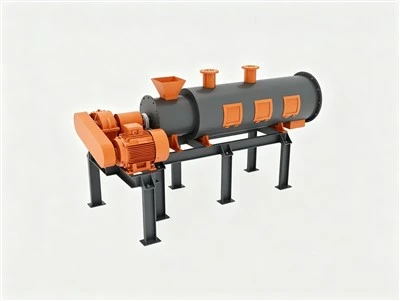
First off, let’s talk about smart granulation—this isn’t just some buzzword to get marketing likes, okay? We’re not talking basic IoT sensors that just sit there collecting dust; we’re talking real-time, adaptive control systems that actually adjust the process while it’s running. Last year, I had a big pharma client that was struggling with low-dose drug granules—like, one batch had 12% variance in active ingredient content, which is a huge red flag for FDA audits. We retrofitted one of our high-speed wet granulation lines with a new AI-powered monitoring system that uses near-infrared (NIR) spectroscopy to scan granules every 0.2 seconds. The algorithm isn’t pre-programmed with a fixed set of rules; it learns from the first 10 minutes of the run when the machine is stable, then tweaks parameters like impeller speed, binder flow rate, and chopper speed on the fly. By the end of the month, their variance dropped to 1.8%—that’s not a typo. The system also logs every single adjustment, so auditors don’t have to sift through 100 pages of spreadsheets; everything’s timestamped and tied to specific granule properties. And get this—we can even connect it to their factory’s ERP system, so if raw material quality drops a tiny bit (like a 2% change in powder density from the supplier), the machine self-adjusts before the batch gets ruined. That’s the kind of tech that actually solves problems, not just sounds cool.
Next up, dry granulation tech is blowing up, especially with battery makers. Wait, why? Because traditional wet granulation uses solvents that are toxic, hard to dispose of, and add extra drying steps that eat up energy and time. For lithium-ion battery cathodes and anodes, consistency is everything—if the granule size is off, the battery’s energy density drops, or it overheats. The latest dry gran machines use something called roller compaction with controlled pressure profiling, not just a fixed roller gap. Old roller compactors would either crush the powder too hard (turning it into fine dust that’s impossible to use) or too soft (so granules break apart when being moved to the next process). The new systems let you adjust pressure across the width of the rollers—so the middle is a bit more compressed, and the edges are lighter, which prevents edge dust. One of our automotive battery clients switched to these machines last quarter and cut their granule waste by 22% while boosting their line speed by 18%. Also, no solvents means they’re complying with EPA rules easier and saving a ton on waste disposal costs—they told us it paid for the machine in 14 months. That’s not a bad ROI, right?
Wait, let’s not sleep on process intensification in twin-screw granulation (TSG). Twin-screw has been around for years, but the latest iterations are way smaller, more modular, and way more precise. Previously, TSG machines were big, fixed units that you couldn’t adjust on the fly if you needed to make a different product—like switching from a pain reliever to a supplement. Now, the new modular screw elements let you swap out sections in under 15 minutes, no tools needed. Also, the screw design itself is different—instead of straight flights, some have offset paddles that create better mixing without over-shearing the material. For the food industry, that’s a game-changer because if you over-shear wheat flour, you break down the proteins and make crumbly bread crumbs instead of the crisp, consistent ones a snack maker needs. We had a snack client that was using a 20-year-old TSG machine that took 3 hours to switch product lines and had 8% rework. The new modular unit? 12-minute changeovers and 1.2% rework. They also use way less energy because the motors are variable-frequency drives that only use as much power as they need, not a fixed level all the time.
Another big one: micro-granulation for personalized medicine. Everyone’s talking about personalized drugs, right? Like, a cancer pill tailored to a patient’s weight, or a kid’s pain dose that’s not a tiny pill you can’t split. Traditional gran machines can’t make granules that are consistent at a sub-1mm size without being super expensive or having huge variance. The new micro-gran tech uses micro-nozzle systems and electrostatic control instead of just mechanical shearing. It’s not spray drying (which is another method, but it’s bad for heat-sensitive materials) — it’s a wet gran process that uses a micro-fluidic chamber to create droplets less than 500 microns, with a size variance of under 3%. One of our pharma partners is using this to make oral disintegrating tablets (ODTs) for pediatric patients—each granule is exactly the right size so the dose is perfect, and it dissolves in the mouth in 2 seconds, no water needed. The FDA is actually taking notice, too—they issued draft guidelines last year on consistent micro-dosing, so this tech is going to be huge for anyone in personalized healthcare.
Wait, let’s talk about sustainability because that’s not a buzzword anymore, that’s a requirement. A lot of people don’t realize that granulation machines use a lot of energy and produce waste, but the latest developments are changing that. For example, a few of our new wet gran machines use heat recovery systems that capture the hot air from the drying stage and reuse it to heat the binder solution or preheat the raw powder. That cuts energy use by up to 30%, according to independent testing we did with a university lab. Also, we’re starting to see machines that process recycled materials—like plastic pellets, or recycled food ingredients—with granule consistency that’s just as good as virgin material. One recycled plastic packaging client used our new machine to make pellets from post-consumer PET, and they were able to sell those pellets to bottle makers at 90% of virgin material pricing, because the granules were just as consistent. That’s a big deal for circular economy goals.
But hold up, I don’t want to make it sound like every new tech is perfect. A lot of gran machine suppliers are hyping up tech that only works for specific use cases. For example, the AI systems I mentioned? They work best for consistent raw materials—if your powder has huge batch-to-batch differences, you still might need manual tweaks until the algorithm learns. And the dry gran machines? They’re great for battery materials, but not so good for some high-viscosity pharma products. That’s why when we work with clients, we don’t just show them the coolest toy in the catalog—we do a free process test at our lab, so they can see exactly how the machine works with their specific materials before they drop any cash. That’s the kind of real, hands-on stuff that’s missing from a lot of vendor pitches.
Let’s also address the stuff that’s coming down the pipe, not just what’s available now. I’ve been testing a prototype for a continuous granulation machine that doesn’t need a separate drying stage— it dries the granules right in the machine while they’re being formed, using infrared heating integrated into the chopper section. Early tests show it cuts total process time from 4 hours to 20 minutes for a typical pharma batch. Also, there’s been talk about biodegradable granule binders that are compatible with existing machines—no more toxic binders that you have to dispose of, just plant-based stuff that breaks down naturally. That’s huge for the food and environmental sectors.
Now, if you’re reading this and you’re like, “Okay, so what does this mean for me?” Let’s be real: if you’re still using a gran machine that’s 10+ years old, you’re probably wasting money on rework, energy, and downtime. The latest tech isn’t just about being “advanced”—it’s about making your product better, cutting costs, and staying compliant with regulations that are only getting tighter. Whether you’re a small snack brand making croutons, a big pharma company making low-dose pills, or an EV maker building the next battery, there’s a gran machine update that can help you.

I’ve been in this game for 12 years, and I’ve seen a lot of fads come and go, but this current wave of tech is actually different. It’s not just faster—it’s smarter, more sustainable, and tailored to specific industry needs, not just “bigger and faster.” If you’re curious about how this applies to your operation, or if you want to see one of these machines in action (we do free demos at our facility or can set up virtual ones if you’re overseas), just reach out. I’m not here to hard sell you something you don’t need— I’m here to help you figure out what will actually work for your process.
Drying and Cooling Machines References
- International Society of Pharmaceutical Engineering (ISPE). (2023). "Adaptive Process Control for Continuous Granulation: Best Practices for Pharma Manufacturing." ISPE Journal of Pharmaceutical Sciences and Engineering.
- Journal of Power Sources. (2024). "Dry Granulation of Lithium-Ion Battery Cathodes: Pressure Profiling for Consistent Granule Morphology." Volume 589.
- Food and Drug Administration (FDA). (2023). "Draft Guidance for Industry: Manufacturing Consistent Microdoses for Personalized Medicine." U.S. Department of Health and Human Services.
- Energy Efficiency and Renewable Energy (EERE). (2023). "Process Intensification in Industrial Granulation: Reducing Energy Use by 30%." U.S. Department of Energy.
- Journal of Cleaner Production. (2024). "Circular Economy in Granulation: Processing Post-Consumer PET for Packaging Applications." Volume 432.
Henan Mingwei Machinery Equipment Co., Ltd.
As one of the most experienced granulation machines manufacturers in China, we have world-leading production equipment and strong manufacturing capabilities. Please rest assured to buy durable granulation machines for sale here from our factory. For price consultation, contact us.
Address: No.461 Qudong Jinsui Avenue, Hongqi District, Xinxiang City, Henan Province, China
E-mail: info@hnmwm.com
WebSite: https://www.hnmwmequip.com/
