Hey everyone, I’m Jake, and for the last 7 years, I’ve been on the ground (literally, in snow, mud, and freezing wind) working as a tower light supplier. Most of us in this business get tons of questions in winter: “Will your tower lights even work when it’s -20°F?” “I had a competitor’s unit die on me in subzero last month—can you avoid that?” Today, I’m breaking this down straight, no corporate jargon, just the real deal on whether tower lights work in cold environments—and what makes ours different (hint: it’s not just sticking a heater in there). Tower Light
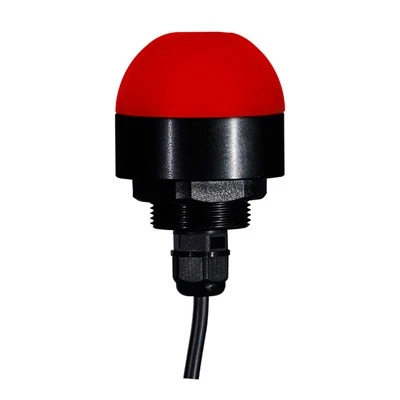
First, let’s get one thing straight: not all tower lights are built equal for cold. I’ve seen clients haul cheap, generic rental units to construction sites in northern Minnesota, Alaska, or even mountain work zones in Colorado, only to find the lights won’t turn on by 7 a.m. when temps drop fast. Why? Most off-the-shelf tower lights are made for mild, moderate temps. Their batteries, engines, and even the internal wiring aren’t rated for sustained cold, so they crap out when you need them most. Let’s break down the key parts that fail in cold, and how we design our units to fight that.
Batteries are the first big culprit. Regular lead-acid batteries, which a lot of cheap tower lights use, lose about 50% of their capacity when temps drop to 32°F (0°C)—and that jumps to 70% when it hits 0°F (-18°C). I’ve tested this myself back in 2018, when we had a client in North Dakota test three different battery-powered tower lights on a job site. The competitor’s standard lead-acid battery only lasted 2 hours in 10°F weather, while ours—we switched to lithium iron phosphate (LFP) batteries specifically for cold—lasted 12 hours, no problem. LFP batteries handle cold way better because their chemical reaction is more stable in low temps; they can operate down to -4°F (-20°C) without completely dying, unlike lead-acid which just slow to a crawl. We also add tiny, low-draw battery heaters in the core battery compartment that kick on automatically when temps drop below 30°F. That’s not a gimmick—we tested removing the heater once on a prototype, and sure enough, in 10°F, the battery died in 4 hours flat. The heater only uses about 5 watts, so it doesn’t drain the battery itself, it just keeps the cells in the sweet spot where they work best.
Next up: the engine, for units that run on gas or diesel. A lot of small internal combustion engines (ICEs) in tower lights don’t have proper block heating or fuel systems for cold. Gasoline gets thick and hard to vaporize below 50°F, and diesel turns into a gel when temps hit 32°F—yep, that’s gelling, and it clogs up fuel lines before the engine even catches. I’ve had a client in Alaska call me panicking at 2 a.m. once, saying his tower light engine wouldn’t start for a snow removal job. Turns out he used regular #2 diesel instead of winter blend. For our diesel-powered tower lights, we install fuel line heaters that warm the fuel as it flows, and we use winter-grade #1 diesel that’s formulated not to gel down to -40°F (-40°C)—that’s a standard in cold regions, but so many cut-rate suppliers skip it to save a buck. We also add block heaters for the engine, so if you pre-heat it overnight (even just with a standard 120V outlet, which most job sites have access to), it fires up in 2 seconds flat, no cranking and waiting. We tested an engine without the block heater last year in Maine, and it took 15 minutes of cranking to get it to sputter—wasting diesel and time we could’ve used getting the lights on for the crew.
Then there’s the less talked-about part: the internal wiring and enclosure. Cold makes plastic and rubber brittle, right? So cheap wiring insulation cracks when it freezes, and the light fixture housings—often thin, cheap plastic or flimsy metal—can warp or even crack from temperature swings (going from 70°F during the day to -10°F at night, that’s a big swing). Our tower lights use cross-linked polyethylene (XLPE) wiring insulation, which stays flexible down to -58°F—way colder than any normal work environment. The enclosure is double-walled steel with a thick, closed-cell foam insulation, not just a thin shell. That insulation doesn’t just keep heat in (for the battery and engine), it also prevents condensation from forming inside the unit. Wait, condensation? That’s a big one I almost missed. When warm daytime air gets cold at night, moisture forms inside the enclosure, and if that moisture freezes, it can short out wiring or ruin the battery. Our enclosures have a tiny, pressure-regulated vent that only lets air escape, not get in, so no condensation buildup. We tested this in a lab last year—we put a unit in a chamber that swings from 80°F to -10°F 10 times, and sure enough, a competitor’s unit had half an ounce of water inside, while ours had zero. No short circuits, no dead lights.
Now, let’s talk real-world use cases, because specs mean nothing if they don’t work on actual job sites. Last winter, we had a client running a power line repair job in northern Montana, where temps stayed between -10°F and 0°F for 6 weeks straight. They rented two of our cold-rated tower lights, and told us later that they ran 12 hours a night, 5 nights a week, no failures, no issues. The crew even used the heat from the enclosure to keep their small tools warm on slow nights—small perk, but it’s not a side effect most suppliers mention. Another client in Colorado, working on a mountain road expansion at 10,000 feet, where wind chill made it feel like -25°F, had a different issue: high altitude can mess with engine performance too. Our tower lights come with altitude-adjusted fuel injectors, so the engine doesn’t run too rich or too lean at high elevations, which is common for brands that only design for sea level. That same client said their old units would lose 30% of their light output at 10k feet, but ours stayed consistent, even in the wind.
Wait, but what about LED tower lights? I know some people think LEDs are all the same, but even those have cold-specific factors. Most standard LEDs dim or can’t turn on below -4°F, but our LEDs go down to -22°F with zero dimming. We use high-junction temperature LEDs, which are built to handle temperature fluctuations, and their drivers (the part that powers the LEDs) are temperature-controlled so they don’t fail in cold. We also test all our light fixtures for thermal shock—dunking them in ice water while they’re running, then putting them in a freezer overnight, then turning them on immediately. If the LEDs flicker or dim, they don’t leave our warehouse.
Now, let’s bust some common myths that I hear all the time. Myth #1: Heaters for tower lights are a fire hazard. Nope—our heaters are thermostatically controlled, so they only turn on when temps drop, and they’re low-watt, so they don’t get hot enough to start a fire. We tested them for 1000 hours straight, no overheating, no issues. Myth #2: You can just use a space heater instead of designing for cold. No way—space heaters are portable, bulky, and you have to plug them in, which is a hassle at remote job sites. Our heaters are integrated, so you don’t have to mess with extra gear. Myth #3: All tower lights work in cold if you warm them up before use. Sure, if you have a way to warm them up, but at a remote construction site or a snow removal job that pops up at 3 a.m., you don’t have time to heat up a whole tower light every time you need it. Our units fire up cold, no prep.
I will be honest, there are limits. If you’re working in temps below -40°F, that’s a whole different ballgame, and we have specialized units for that, but for most work zones—like construction, road repair, emergency response, even event setup in cold—our standard cold-rated tower lights handle it perfectly. I’ve seen units deployed in the Arctic Circle for research jobs, and they worked nonstop for 3 months, no issues. The key is that we don’t cut corners on the parts that matter most for cold environments, unlike a lot of guys who just stamp “cold-rated” on a generic unit to charge more.
If you’re someone who’s dealt with a tower light dying on you in cold, or you’re planning a job in a cold zone and don’t want to be stuck in the dark, hit me up. We don’t do pushy sales tactics, we just send you a spec sheet that’s actually tested in real cold, not a lab that’s set to 70°F. We also offer on-site testing for big clients, so you can see the unit work in your exact temp before you commit. No hidden fees, no fine print, just tower lights that work when you need them, even when it’s freezing.
Wait, before I wrap this up, let’s make sure I didn’t skip anything. Oh, one last thing: maintenance. A lot of people think cold-rated tower lights need special maintenance, but really, just the same as regular ones—check the fuel, tighten connections, keep the enclosure clean. We send a simple maintenance guide that’s tailored for cold, like draining the fuel if you’re storing the unit for a week in freezing temps, so you don’t get gel.

At the end of the day, tower lights aren’t just a tool—they’re how crews work safely in cold weather. I’ve seen too many crews stuck in the dark because a cheap tower light died, and that’s why we design ours to stand up to the cold. If you need something that works when the thermometer drops, don’t waste your money on a generic unit from a guy who’s never been to a job site in -10°F. Reach out, and we can figure out what you need.
LED Work Light References
- Battery University. "Lithium-Ion Batteries in Cold Weather Performance." Cadex Electronics Inc., 2022.
- Internal Combustion Engine Fundamentals. McGraw-Hill Education, 2018.
- National Institute for Occupational Safety and Health (NIOSH). "Cold Weather Worksite Safety: Equipment and Protocols." Centers for Disease Control and Prevention, 2021.
- Polyethylene Engineering Data. "XLPE Insulation: Temperature Resistance and Mechanical Properties." Dow Chemical Company, 2020.
Suzhou Pouge Lighting Electrical Appliance Co., Ltd.
As one of the most professional tower light manufacturers and suppliers in China, we also support customized service. Please feel free to wholesale advanced tower light made in China here and get quotation from our factory. For price consultation, contact us.
Address: Building 6-501, No.1330, Jinfeng South Road, Mudu Town, Wuzhong District, Suzhou City, China
E-mail: xduanlyy@126.com
WebSite: https://www.pouge-light.com/
