Hey there, let’s talk about something that most heavy-duty truck and bus operators ignore way too often: the clutch slave cylinder. As a clutch slave cylinder supplier, I see firsthand how skipping simple maintenance on these parts turns a minor, fixable issue into a total roadside breakdown—and that’s not just a hassle, it costs you money, time, and possibly a load you can’t afford to delay. I’ve been in this game long enough to know that heavy-duty vehicles (think 18-wheelers, delivery fleets, construction trucks) run on parts that need way more than a once-a-year glance, and the slave cylinder is at the center of how your clutch actually works. No jargon, no stuffy industry manual quotes—just real talk about what’s actually required to keep these things running smooth. Clutch Slave Cylinder
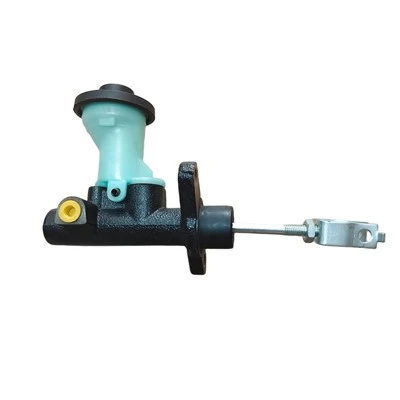
First, let’s get on the same page about what a clutch slave cylinder does, in plain terms. It’s the little (well, for heavy-duty stuff, it’s not that little) hydraulic part that takes the pressure from your clutch master cylinder and turns it into the force that disengages the clutch when you hit the pedal. If it’s working, shifting gears is crisp—no grinding, no weird “sticky” pedal feels. If it’s not? You’re either stuck in first gear, or pressing the pedal 3 times to shift, or worse, the whole clutch system goes out mid-haul. I’ve had fleet managers call me panicking at 2 a.m. because their rig died on a highway, and 9 times out of 10, it’s something that could’ve been caught with 10 minutes of basic checks.
Now, let’s get to the actual maintenance requirements—this is the stuff you can’t skip, even if you’re swamped with deliveries.
First up: Fluid checks, and not just any fluid. A lot of operators just top off with whatever brake fluid’s lying around their shop, but heavy-duty clutch slave cylinders use specific hydraulic fluid, usually DOT 3, DOT 4, or the specialty mineral oil stuff for some newer models. The big rule here is: never mix fluids. DOT 3 and DOT 4 are glycol-based, and if you dump that into a system that needs mineral oil, you’re looking at seal degradation way before its time. I’ve seen that firsthand—fleet swapped fluid once every 2 years, mixed DOT 4 into a mineral-oil slave, and 6 months later, the cylinder started leaking. That’s a $500 part you could’ve avoided replacing. Also, check the fluid level every 5000 miles, not every oil change. Heavy-duty idling and stop-and-go traffic (like urban delivery buses) makes the fluid break down faster. And when you check, don’t just look at the reservoir—peek at the slave cylinder itself for signs of fluid seepage around the rod or the mounting bolts. That’s a tiny leak now, but if you ignore it, next thing you know, there’s no pressure in the lines and your clutch’s dead.
Next: Bleeding the system. A lot of guys think bleeding is just for when you replace a part, but no—you should do it every 20,000 miles, or whenever you notice the clutch pedal feels “spongy.” Air in the hydraulic lines kills pressure, so when you press the clutch, the air compresses instead of moving the slave cylinder rod. For heavy-duty rigs, it’s not as simple as bleeding a car’s brake lines—most have a bleeder valve on the slave cylinder, and you need to do it with a friend, or a vacuum bleeder tool (pro tip: don’t use a old turkey baster, it won’t get all the air out). Here’s a hack I tell my customers: when you bleed, keep an eye on the fluid reservoir. If it gets too low while you’re bleeding, air will get sucked back in, and you’ll have to start over. Also, if you see any weird, cloudy fluid when bleeding, that’s water in the system—you need to flush all the old fluid out and replace it, because water boils at low temps, especially when you’re hauling heavy loads up a mountain pass. I’ve seen a rig on a grade where the clutch fluid boiled, the slave couldn’t disengage, and they burned out the clutch disc in 10 minutes. Bleeding isn’t fun, but it’s way cheaper than replacing a whole clutch assembly.
Then: Inspecting the cylinder and its components. This isn’t a “set it and forget it” part—you need to do a visual check every time you’re under the truck for an oil change or tire rotation. Let’s break down what to look for: first, the rubber seals. The slave cylinder has a piston inside, and rubber seals keep the fluid from leaking past it. Heavy-duty use means these seals take constant heat and pressure, so they crack, get brittle, or swell if the wrong fluid’s been used. If you see any small cracks on the seal, or fluid around the piston rod, that’s a sign the seals are going. Don’t wait for it to leak badly—replace the seals or the whole cylinder before that rod starts seizing up. Next, the mounting points. The slave cylinder bolts to the bell housing, right? Those bolts vibrate loose over time, especially on rough construction sites or bumpy back roads. If the cylinder is wobbly, that means it’s not applying even pressure to the clutch fork, so you’ll get uneven clutch wear. Tighten those bolts to the manufacturer’s torque spec—most heavy-duty ones are around 15-20 ft-lbs, but don’t just guess, check the manual or hit me up if you’re not sure. Also, check the pushrod that connects the slave cylinder to the clutch fork. If it’s bent, or has wear marks, that can throw off the engagement. A bent pushrod might make the clutch slip, even if the slave cylinder’s working fine. I’ve had a customer skip this check, replaced a slave cylinder, and still had shifting issues—turns out the pushrod was bent from hitting a pothole, so we swapped that and the problem was gone.
Another big one: Preventing contamination. Heavy-duty vehicles are around dirt, dust, mud, and all kinds of grime, and that stuff loves to get into the clutch system. The slave cylinder’s rod has a dust boot, right? That little rubber or plastic cover that keeps gunk out of the piston area. If that boot is torn, dirt and dust get in, scratch the piston, and cause leaks or seizing. I can’t tell you how many times I’ve replaced a perfectly good slave cylinder just because the dust boot was torn—grit got into the cylinder, scratched the bore, and fluid leaked out within a month. So check that boot every time you’re under there; if it’s torn, replace it. They’re cheap, like $10-$15, and save you a $300 slave cylinder. Also, when you’re topping off fluid, make sure the reservoir cap is clean. If there’s dirt on it, that can get into the reservoir and down into the lines. Simple stuff, but it works.
Wait, what about when you’re using your vehicle heavily? Like, if you’re a hauling company that’s pulling 80,000 lbs every day, or a bus that’s stopping and starting 100 times a day—your maintenance schedule needs to be tighter. I tell my fleet customers to bump all those intervals down by a third. So instead of fluid checks every 5000 miles, do them every 3500. Bleeding instead of 20k, do it every 15k. Those heavy use cases put way more stress on the slave cylinder and its parts—heat from frequent engagement, more pressure on the seals, more vibration. I had a long-haul customer who was doing 120k miles a year, and he was skipping the fluid checks; after a year and a half, his slave cylinder’s piston started seizing, and he was stuck in a truck stop for 6 hours. Once he adjusted his schedule to fluid checks every 3k, he hasn’t had an issue in 4 years.
Also, don’t ignore warning signs. A lot of operators write off weird clutch behavior as “just how heavy-duty clutches are,” but no—here’s what to watch for: the clutch pedal feels mushy or spongy when you press it, you have to press it all the way to the floor to shift, you hear a squeal or grind when you shift, or the clutch slips when you’re pulling a heavy load. Those are all early signs that something’s up with the slave cylinder, and catching it early means minor maintenance, not a full replacement. I had a customer come in with a leaking slave cylinder, caught it early, and we replaced the seals for $80. If he’d waited another 1000 miles, the scratch would’ve been bad enough that he needed a whole new cylinder for $400. That’s the difference between cheap and costly.
Now, let’s bust a myth I hear all the time: “I don’t need to maintain my slave cylinder, I just replace it when it breaks.” No. Slave cylinders for heavy-duty rigs aren’t cheap—they range from $300 to $800, depending on the model, and that’s not including labor. Doing 10 minutes of checks every few thousand miles is way cheaper than replacing the whole thing every 2 years because you skipped maintenance. And for fleets, downtime is money—each day a rig is out of service is thousands in lost revenue. A $50 maintenance check is nothing compared to that.
As a clutch slave cylinder supplier, I work with all kinds of operators—small fleet owners, independent truckers, big bus companies—and one thing’s consistent: the ones who stick to a simple maintenance routine for their slave cylinders barely ever have issues. The ones who ignore it? They’re always calling me for replacements, usually at the worst time. Look, I get it—you’re busy, your truck’s your livelihood, and you have a million things to worry about. But the slave cylinder is a small part that makes a huge difference. Taking 10 minutes every few thousand miles to check fluid, look for leaks, and make sure that dust boot isn’t torn will save you so much headache down the line.

If you’re running a heavy-duty fleet, or you’re an independent operator who’s tired of clutch issues, hit me up to chat about tailored maintenance plans or the right parts for your rig. I don’t do the generic stuff—we work with you to figure out what fits your specific use, whether you’re a long-haul hauler, a construction rig, or a city delivery fleet. No pushy sales, no overpriced parts, just real advice from someone who’s been in this for years and knows how important your truck running is to you.
Clutch Master Cylinder References:
- Heavy Duty Clutch System Maintenance Guidelines, National Truck Equipment Association (NTEA), 2022
- Hydraulic Component Maintenance for Medium and Heavy-Duty Vehicles, Automotive Service Association (ASA), 2021
- Common Failure Modes of Clutch Slave Cylinders in Stop-and-Go Heavy-Duty Operations, SAE International, 2020
Ruian Xinyao Automobile Parts Co., Ltd.
With abundant experience, we are one of the most professional clutch slave cylinder manufacturers and suppliers in China. We warmly welcome you to wholesale bulk advanced clutch slave cylinder from our factory. If you have any enquiry about cooperation, please feel free to email us.
Address: Xialin Industrial Zone, Tangxia Town, Ruian City,Wenzhou City,Zhejiang Province,China
E-mail: 18969725686@163.com
WebSite: https://www.raxinyao.com/
