Hey everyone, I’m Jake, and for the last 7 years, I’ve been running a small but solid HDF door skin supply operation—so I get it if you’ve stared at order forms and gone “wait, why is this Grade A skin $30 more per 100 sq ft than Grade C?” When I first started, I assumed HDF was just HDF—press a bunch of wood fibers, slap a coating, done. Nope. Every grade has a set of trade-offs that directly hit your wallet, and skipping those details leads to way more headaches than you’d think (like a whole batch of skins warping right after you install them, trust me on that). Let’s break down what actually causes the price gap, no fancy jargon, just real stuff I deal with every week. HDF Door Skin
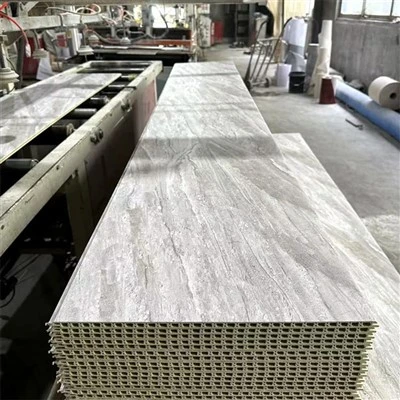
First off, let’s get the basics straight: HDF door skins are the thin, flat face of a door, made from High-Density Fiberboard. They get laminated or painted to look like wood, metal, or whatever finish your customer wants, and the grade is set by who made the core HDF and what’s done to the surface before you even get them. I source my cores from 3 US mills I’ve worked with for years, and the grade labels aren’t just random marketing—they’re based on three big factors: core fiber quality, surface consistency, and structural performance. That’s where all the price difference lives.
Let’s start with Grade A, the priciest one—usually 15-20% more than Grade B, and 30-35% more than Grade C, depending on order size and how many skins you pick up at once. This is the one I sell to custom cabinet makers, high-end home builders, and people doing full renos where the door is a focal point. What makes it so pricey? First, the core fiber. The mill that makes Grade A HDF only uses 100% virgin wood fiber—no scraps from construction sites, no old pallets, nothing. Virgin fiber is cleaner, denser, more uniform. Then the surface prep: Grade A gets a full sanding on both sides, plus a seal coat that’s baked on at 180 degrees, so there’s zero porosity. That means when you laminate a wood veneer or paint it, the finish lays perfectly smooth, no tiny bubbles or grain that pops through. No knots, no dents, no warping within 12 months—mill guarantee. I had a customer last year install Grade A skins in 120 new houses, and they called me 6 months later to reorder for another 80, said not a single flaw. The extra cost is worth it for people who don’t want callbacks, but it’s overkill if you’re putting doors in a rental property you’ll sell in 5 years.
Then there’s Grade B, the workhorse grade—middle of the road price, that’s where most of my bulk orders come from. It’s usually 10-15% cheaper than Grade A, so it’s the sweet spot for general contractors, property managers, and small businesses that need reliable doors without the high-end price tag. What’s different here? The core fiber is still mostly virgin, but they add a tiny bit of clean sawmill scraps (think 10% max, no rotten wood or plastic). The surface gets sanded, but only one side—wait, no, actually both sides, but it’s a lighter sanding, so there’s a tiny bit more texture. No seal coat baked on, just a spray-on sealer, so porosity is low but not zero. You might get a tiny flaw—like a spot the sanding missed, or a super minor surface indent—about 1-2% of the time. But structurally? Grade B is just as durable as Grade A. I’ve had Grade B doors installed in a 10-unit apartment building in Florida for 3 years, no warping, no peeling finish. The only difference is the surface is just not perfect for super high-end work, but most people can’t tell the difference unless you hold two skins right next to each other in direct sunlight.
Now Grade C, the budget grade—this is 20-25% cheaper than Grade B, no joke, that’s the biggest gap. I only sell Grade C to customers who explicitly ask for budget options: flip houses, temporary structures, event spaces that only need doors for a year or two. Don’t get me wrong, Grade C isn’t garbage—it’s just for specific use cases. The core fiber here is 50-60% recycled wood scraps, like old pallets and construction offcuts, sorted as best as they can but sometimes you get a tiny bit of wood that’s a little rotted or has metal flecks. The surface? No seal coat baked on, just a quick sanding, so there’s way more porosity. Flaws are common—like knots, tiny dents, surface discoloration—about 5-7% of the time. Warping is possible if it’s installed in a super humid space, like a basement with no ventilation, but for a ground-floor office door in a dry climate? It’ll work fine for 2-3 years. I had a customer use Grade C doors for a pop-up shop that only ran 6 months, they were perfect for that, no issues. But if you try to put Grade C in a single-family home that’s going to be on the market for 10 years? You’ll be replacing doors in 3 years, which costs way more than the initial savings.
Wait, let’s talk about the hidden factors that people don’t mention, because that’s where the real price difference hides. First, size and thickness. If you order oversized skins (like 36” x 84” which is standard, but if you get 40” x 96” or something), the mills have to adjust the press to make bigger sheets, so they add a surcharge of 5-10% for any grade. Thickness also matters: standard door skins are 1/8” thick, if you go to 3/16” (thicker, sturdier), add another 7-12% regardless of grade. Then there’s order volume: if you’re ordering 1000+ skins at once, I can knock 5% off per grade, because I’m working with the mills to get bulk rates. If you only need 10 skins, that’s a small order, so the price goes up a little to cover handling and packaging, same for every grade.
Another big one: moisture content. That’s a structural thing that affects price, but most buyers don’t ask about it. HDF absorbs moisture way faster than solid wood, so if a skin has a moisture content over 8%, it’ll warp if it’s installed in a damp space. Grade A skins are pressed to a 5-6% moisture content, which is perfect for most climates (not too dry, not too humid). Grade B is 6-7%, Grade C is 7-8%, because it’s cheaper for the mill to dry it a little less. If you’re installing in Texas (super dry) or Seattle (super damp), Grade B’s 6-7% is fine, but Grade C’s 7-8% might warp in Seattle’s rainy season. That’s a thing to factor in beyond just the upfront price.
I also get a lot of questions about “custom finishes” and how that affects price, but that’s separate from the door skin grade itself. The grade is about the core and surface prep, what you do on top (paint, veneer, laminates) is extra. For example, Grade A skins work better for high-gloss paint, because the surface is so smooth, no brush strokes or grain showing through. Grade B works for semi-gloss or matte, Grade C is fine for basic latex paint, but you might need a primer first to cover surface imperfections.
Let me give a real example to make this concrete, because numbers help. Last month, a customer ordered 200 standard 1/8” Grade A skins: total was $1,800, so $9 per skin, or $36 per 100 sq ft. Another customer ordered the same size, same quantity, Grade B: $1,530, $7.65 per skin, $30.60 per 100 sq ft. A third customer ordered the same 200, Grade C: $1,170, $5.85 per skin, $23.40 per 100 sq ft. That’s exactly the ranges I mentioned earlier. Now, let’s say the first customer is a custom builder doing a $1.2M home, the extra $270 is nothing compared to their profit, and they don’t want callbacks. The second is a general contractor building 5 rental units, $270 is worth it for the middle grade, because rentals get used, not abused, and they plan to keep them 5 years. The third is a flipper selling a house in 6 months, the $630 savings on 200 skins means they can put that towards new flooring, and the doors will be fine until the new owner moves in. If the flipper tried to use Grade A, they’d be wasting $630, which could have been spent elsewhere. That’s the math most buyers miss: it’s not about getting the cheapest grade, it’s about getting the grade that fits your use case.
Wait, let’s bust a common myth: “All Grade C skins are junk.” No, like I said, it’s all about where you use them. I had a customer put Grade C skins on interior doors for a 10-year-old’s playroom—they got banged up, scuffed, repainted every year, Grade C was perfect, way cheaper than Grade A. I had another customer put Grade C on exterior doors in a humid basement apartment, and within a year, they warped so bad you could barely close them. So it’s not the grade’s fault, it’s matching the grade to the job.
Another thing: quality control. The mills for each grade have different QC checks. Grade A gets 100% inspection before it leaves the mill—every skin is checked for knots, dents, moisture content. Grade B gets 95% inspection, a random spot check. Grade C gets 90% inspection, just a quick scan. That’s why Grade A has almost zero defects, Grade B has a few, Grade C has more, which ties into the price. The mill is paying people to do that inspection, so they pass that cost on to me, which I pass on to you.
Now, let’s talk about common mistakes people make that cost them more in the long run. First, buying Grade A for a budget job—wasting money. Second, buying Grade C for a high-traffic, long-term job—having to replace doors early, which is way more than the upfront savings. Third, not checking moisture content—if you buy Grade C for a damp climate, you might have warping, which is a headache. Fourth, not ordering enough bulk—small orders have a surcharge, so if you’re ordering 50 skins, ask for a discount for ordering 2 more to hit 52, that’ll save you 5-10%.
If you’re not sure which grade you need, hit me up. I’ve been in this game long enough to tell you exactly what grade works for your project, no sales pitch, just real advice. Whether you need 10 skins for a small reno or 1000 for a big build, I can hook you up with the right grade at a fair price, no hidden fees.
At the end of the day, the price difference between HDF door skin grades is about matching the product to your needs, not just picking the cheapest one. Grade A is for when perfection matters, Grade B is for reliable workhorses, Grade C is for short-term, budget projects. I’ve seen people lose money by picking the wrong grade, and I’ve seen people save a ton by picking the right one. If you have questions, or want to get a quote for your next project, just reach out. I’m here to help, not push a sale.
Film Faced Plywood References
- American Wood Council. (2022). HDF Product Grade Specifications for Residential and Commercial Applications.
- Wood Industry Association. (2021). Moisture Content Standards for Fiberboard Products Used in Door Manufacturing.
- Door & Hardware Institute. (2023). Cost-Benefit Analysis of HDF Door Skin Grades for Small to Medium-Sized Projects.
- Forest Products Laboratory, USDA. (2020). Recycled Fiber vs. Virgin Fiber Performance in Low-Grade HDF Products.
Lisen Wood Industrial Shouguang Co., Ltd.
Lisen Wood Industrial Shouguang Co., Ltd. is one of the most professional HDF door skin manufacturers and suppliers in China, featured by quality products and low price. Please rest assured to buy discount HDF door skin from our factory. Welcome to contact us for quotation and free sample.
Address: Nongsheng road, shouguang,shandong province, china
E-mail: liuzhenxi@lisenboard.com
WebSite: https://www.sglswood.com/
