If you’ve ever swapped out old interior bulbs for white LED ones, you’ve probably stared at a jumble of old bulbs on the kitchen table, wondering how many you actually need—no guesswork, no overbuying, no leftover bulbs gathering dust in a cabinet. As a supplier of white LED interior bulbs, I’ve fielded this question at least a dozen times a week from homeowners, small business owners, and even renters doing quick upgrades, and the answer isn’t one-size-fits-all. It depends on three things: the type of space you’re lighting, the brightness you actually want, and the specifications of the bulbs you’re replacing. Let’s break this down like we do with a customer who walks into our showroom, no jargon, no fluff. White LED Interior Bulbs
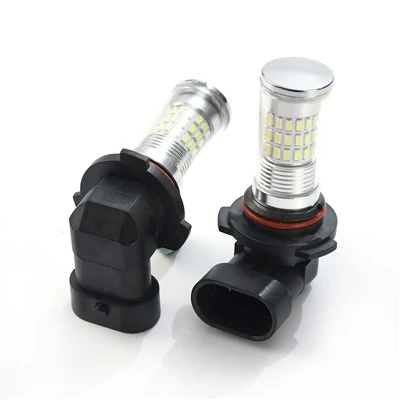
First, let’s get rid of the myth that “more bulbs = better.” A lot of people default to counting every old bulb and buying the exact same number, but that misses a key point: older incandescent or halogen bulbs put out way less light per bulb than most white LED interiors do. A standard 60-watt incandescent, for example, only gives off about 800 lumens— that’s the real measure of brightness, not watts. A comparable white LED interior bulb? It puts out the same 800 lumens at just 10 watts, a quarter of the energy. So if you’re replacing all 60-watt incandescents, you don’t need the same number of bulbs—you could even get away with fewer in some fixtures, as long as you match the lumen output your space needs.
Let’s start with the most common spaces people replace bulbs in, because that’s where most of you will fall. For a small bedroom, say 100 square feet, the general lighting rule is 2000 to 3000 lumens total. If your old fixtures used two 60-watt incandescents (800 lumens each, so 1600 total), that’s close, but a lot of people want a bit brighter for reading or getting dressed. So for that bedroom, you’d need two 800-lumen white LED interior bulbs to hit 1600, or two 1000-lumen ones for 2000, which is the sweet spot. If you had a single 60-watt in a closet (super small, 50 square feet), 500 lumens is enough, so one 500-lumen white LED is all you need—no need to overbuy just because you’re switching to LED.
Living rooms are a bit different, because they’re used for multiple activities. A 200-square-foot living room needs 3000 to 4000 lumens total for general light, plus task lighting like table lamps for reading. Let’s say your old setup had three 75-watt halogens (1100 lumens each, so 3300 total). Replacing those with three 1000-lumen white LED interiors would give you the same brightness, but if you want to add reading light, you can use one extra 800-lumen bulb in a table lamp without overdoing it. I had a customer last month who tried to replace three halogens with five 800-lumen LEDs and complained the living room was too bright—turns out he overcounted because he thought LED was dimmer, but his old bulbs were actually higher lumen than he remembered. That’s why checking your old bulb’s specs (lumens, not watts) is non-negotiable.
Kitchens are where people usually get confused, because they need both general lighting and task lighting under cabinets. A 150-square-foot kitchen needs 4000 to 6000 lumens total. If your old kitchen had four 60-watt incandescents (800 lumens each, 3200 total), that’s a bit dim for prepping food, so four 1000-lumen white LED interior bulbs would push you to 4000, which works. But the under-cabinet lights—those are small, usually 12-volt, old-style bulbs that put out 300 lumens each. For that, two 300-lumen white LED strip bulbs (wait, no, our interior bulbs include the under-cabinet ones too) would replace two old under-cabinet bulbs, easy. I once worked with a small café that wanted to replace all their interior bulbs, including in the booths and over the espresso machine. They had 12 fixtures total, each with two 60-watt incandescents, so 24 old bulbs. We did a quick calculation: the café needed 5000 lumens total for the service area, so instead of 24 bulbs, we suggested 18 800-lumen white LED interiors—fewer bulbs, same brightness, lower electric bill. That’s the kind of math that works for commercial spaces, too.
Now, let’s talk about fixture type, because that changes everything. Some fixtures can only hold a certain bulb size, and some can’t handle higher lumen bulbs. For example, a small pendant light over a dining table is usually rated for a maximum 60-watt incandescent, which means the socket can handle up to 800 lumens. If you put a 1500-lumen white LED in there, it’ll be too bright, and the socket might overheat (though our white LED interiors are designed to be cool-running, so that’s less of a risk, but brightness still matters). A floor lamp, on the other hand, has a larger socket, so it can handle a 1200-lumen bulb without any issues. So when you’re counting, don’t just look at how many old bulbs you have—check the fixture’s maximum lumen rating, which is usually printed on the socket or the fixture’s box. If you don’t have the old box, a quick rule of thumb: most standard interior fixtures (pendants, ceiling mounts, table lamps) can handle up to 1000 lumens, while larger fixtures (chandeliers, floor lamps) can go up to 1500 lumens.
Another factor: color temperature. White LED interior bulbs come in different color temperatures—2700K is warm, like incandescent, great for bedrooms; 3000K is soft white, good for living rooms; 5000K is daylight, perfect for kitchens and offices. If you’re replacing old bulbs that were warm (2700K), you’ll want to stick to that to avoid a harsh, blue light that feels out of place. But does color temperature affect how many bulbs you need? Not directly, but if you’re switching from a dim warm bulb to a bright cool one, you might actually need fewer bulbs than you think. A customer last year replaced all 10 of their old 40-watt incandescents (450 lumens each, 4500 total) with 10 of our 600-lumen 2700K white LEDs, and said the light was brighter, more even, and they only used a fraction of the energy. They didn’t need to adjust the number, but that’s because the old bulbs were low-lumen.
Wait, what about spaces with multiple fixtures, like a hallway? A 10-foot hallway usually has two to three ceiling fixtures, each with one bulb. The total lumen needed is 1000 to 2000, so two 800-lumen white LEDs would be perfect. I had a renter who replaced three old 25-watt incandescents (220 lumens each, 660 total) with three 400-lumen white LEDs—way too dim, she said, and wanted to buy more. That’s where the mistake was: she thought all LEDs were the same brightness, so she just matched the number, but didn’t check the lumen of her old bulbs vs the new ones. That’s why when you’re calculating, start with the old bulb’s lumen, not the watt.
Let’s put this all together with a step-by-step formula you can use right now, no calculator needed: Step 1: Count how many fixtures you have, not how many old bulbs. A fixture is one spot where a bulb goes, even if it has two sockets (like a double ceiling mount). Step 2: For each fixture, check the old bulb’s lumen (look at the box it came in, or if it’s burned out, check the sticker on the bulb itself—most bulbs have “lm” numbers on them). If you can’t find the lumen, use this: 40-watt incandescent = 450 lm, 60-watt = 800 lm, 75-watt = 1100 lm, 100-watt = 1600 lm. Step 3: Total the lumens from all your old bulbs. Step 4: Divide that total by the lumen of the white LED interior bulbs you want to buy. That number is how many bulbs you need. For example: 5 old bulbs, each 800 lm, total 4000 lm. Your chosen white LED is 800 lm. 4000 / 800 = 5 bulbs. If your chosen LED is 1000 lm, 4000 / 1000 = 4 bulbs. That’s it—no guesswork.
Now, what about when you’re not replacing every bulb? Say you’re doing a room at a time, not the whole house. Let’s say you’re doing the living room, which had three 60-watt incandescents (800 lm each, 2400 total). You want a bit brighter, so 3000 total lm. Your white LED is 800 lm. 3000 / 800 = 3.75, so you need 4 bulbs. That’s a quarter of a bulb, which doesn’t exist, so round up to 4. That’s fine, because it’s just a bit brighter, and most people prefer a little extra light in living rooms. If it’s too bright, you can always swap one back later, but it’s easier to round up than down, because you don’t want a dim room.
As a white LED interior bulb supplier, I’ll tell you the biggest mistake people make here is either counting too many bulbs (because they think LED is dimmer, so they buy 1.5 times the number they need) or too few (because they assume all LEDs are the same, and end up with a dark room). We’ve had customers come back with 20 extra bulbs because they bought twice the number they needed, and others who had to place a second order because they bought half the number. That’s why we always tell people to do the lumen count first, not the bulb count.
Another thing to consider: dimmable bulbs. If you have dimmer switches in your space, make sure the white LED interior bulbs you buy are dimmable. Some older dimmers don’t work well with LED bulbs, but most of our white LED interiors are designed to work with standard dimmer switches, so you don’t have to adjust the number of bulbs you need—you can just dim them if they’re too bright. A lot of people with dimmers worry they need more bulbs, but that’s not true; dimming just adjusts the brightness, not the total number of bulbs.
Let’s run through a few real customer scenarios to make this concrete. First, a 1-bed apartment with 8 interior fixtures: 1 bedroom (2 fixtures, 1 bulb each), 1 living room (1 fixture, 2 bulbs), 1 kitchen (2 fixtures, 1 bulb each), 1 hallway (2 fixtures, 1 bulb each). Old bulbs are all 60-watt incandescents (800 lm each). Total old lumens: (3 bedroom bulbs x 800) + (2 living room bulbs x 800) + (2 kitchen bulbs x 800) + (2 hallway bulbs x 800) = (2400) + (1600) + (1600) + (1600) = 7200 lm. Our standard white LED interior is 800 lm, so 7200 / 800 = 9 bulbs. That’s 9 bulbs, not 8—just one extra, but that’s enough to replace all old bulbs, with a little extra brightness if needed. Second, a small office with 12 fixtures, each with a 75-watt halogen (1100 lm each). Total old lumens: 12 x 1100 = 13200 lm. Our commercial-grade white LED interior is 1200 lm, so 13200 / 1200 = 11 bulbs. That’s one fewer bulb, same brightness, lower energy cost—perfect for a small business owner looking to save on utility bills.
Now, what about overbuying? I always tell customers to buy 10% extra bulbs when they do a full replacement. Bulbs can break while installing, and it’s way easier to have a few spares than to run to the store in the middle of replacing a room. For the 1-bed apartment, 9 bulbs + 1 spare = 10. For the small office, 11 + 1 = 12. That’s a small cost to avoid the hassle of stopping mid-project.
I get that a lot of people don’t want to do math, so that’s why we have a free tool on our (no, wait, don’t add a link) – we can help you calculate, just reach out to us directly. No need to guess, no need to do the lumen math yourself. Just tell us the number of fixtures you have, and what kind of old bulbs you’re using, and we’ll give you a exact number of white LED interior bulbs you need, with free shipping on bulk orders. We’ve been supplying white LED interiors for residential and commercial spaces for years, so we know the difference between a bulb that works and one that’s going to leave you with a dark room.
Wait, one last thing: if you have recessed lighting, which is super common in living rooms and kitchens, the same rule applies, but recessed bulbs are a separate line of our white LED interiors. A standard 5-inch recessed can uses a 60-watt incandescent (800 lm), so you’d replace it with an 800-lumen recessed white LED, same as the formula. No extra bulbs needed, no changes. That’s why our white LED interiors (including recessed, under-cabinet, and standard shape) are designed to match the exact lumen output of old bulbs, so you don’t have to adjust your number.

At the end of the day, the number of white LED interior bulbs you need is all about brightness, not how many bulbs you had before. If you stick to counting lumens, not watts, and match your total old lumens to the lumens of the bulbs you’re buying, you’ll get it right every time. No overbuying, no dim rooms, just a smooth switch to energy-efficient LED lighting. If you’re planning a full replacement, or just have a few fixtures left to swap, don’t hesitate to reach out to us. We’ll walk you through every step, from calculating the exact number of bulbs you need to making sure you get the right color temperature for your space.
LED Motorcycle Light Bulbs References:
- Illuminating Engineering Society (IES). (2021). Lighting Handbook: Interior Lighting.
- U.S. Department of Energy. (2022). LED Lighting Facts: Lumens and Watts for Residential Applications.
- National Electrical Manufacturers Association (NEMA). (2020. Standard for Interior Lighting Fixtures and Bulb Compatibility.
- Energy Star. (2023). Guide to Replacing Incandescent Bulbs with LEDs.
Shine Bright Optoelectronic Co., Ltd.
As one of the most professional white led interior bulbs manufacturers in China, we also accept customized orders. Please feel free to buy bulk advanced white led interior bulbs in stock here from our factory. Welcome to contact us for quotation.
Address: 6th Floor, Buildings B & C, Baotang Industrial Zone, No.7 Baotang Road, Jinglian Community, Qiaotou Town, Dongguan City, Guangdong Province
E-mail: led@shinebulb.com
WebSite: https://www.shinebulb.com/
