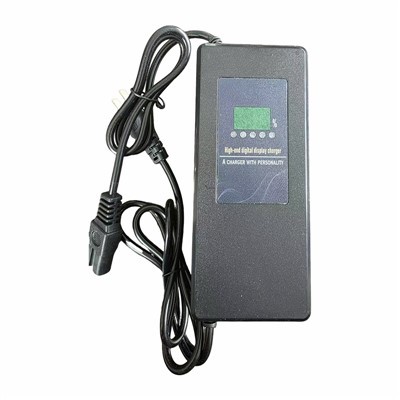
As a supplier of lithium battery chargers, I often encounter various questions from customers. One of the frequently asked questions is whether a lithium battery charger can charge a battery that has been stored for a long time. This question is not only relevant to the functionality of our chargers but also to the proper use and maintenance of lithium batteries. In this blog post, I will delve into the science behind lithium batteries, the effects of long – term storage, and whether our chargers can handle such batteries. Lithium Battery Charger
Understanding Lithium Batteries
Lithium batteries are widely used in various applications, from smartphones and laptops to electric vehicles, due to their high energy density, long lifespan, and low self – discharge rate compared to other battery types. The basic principle of a lithium battery involves the movement of lithium ions between the anode and the cathode during the charging and discharging process. When charging, lithium ions are extracted from the cathode and inserted into the anode; when discharging, the opposite occurs.
The performance of a lithium battery is affected by several factors, including temperature, charging and discharging rates, and the state of charge (SOC) at which it is stored. For instance, storing a lithium battery at a high temperature can accelerate the degradation of the battery’s electrodes and electrolyte, reducing its capacity over time. Similarly, storing a battery at a very high or very low SOC for an extended period can also lead to irreversible damage.
Effects of Long – Term Storage on Lithium Batteries
When a lithium battery is stored for a long time, several things can happen. First, the self – discharge process continues, albeit at a slow rate. Even though lithium batteries have a relatively low self – discharge rate compared to other battery chemistries, over months or years, the battery’s SOC can drop significantly.
Second, chemical reactions can occur within the battery during storage. For example, the formation of lithium metal deposits on the anode, known as lithium plating, can happen if the battery is stored at a low temperature or a high SOC. Lithium plating not only reduces the battery’s capacity but also poses a safety risk as it can cause internal short – circuits.
Another issue is the degradation of the solid electrolyte interphase (SEI) layer. The SEI layer is a thin film that forms on the surface of the anode during the first few charge – discharge cycles. It plays a crucial role in preventing further reactions between the anode and the electrolyte. However, over time, the SEI layer can break down, which can lead to increased battery resistance and reduced performance.
Can a Lithium Battery Charger Charge a Long – Term Stored Battery?
The answer is generally yes, but with some caveats. Our lithium battery chargers are designed to be intelligent and adaptable to different battery conditions. They are equipped with features such as over – charge protection, over – discharge protection, and temperature monitoring to ensure the safety and proper charging of the battery.
When charging a long – term stored battery, the charger first needs to assess the battery’s state. If the battery’s voltage is extremely low, the charger will start with a very low – current charge, known as a trickle charge. This slow charging process helps to restore the battery’s voltage gradually without causing damage.
As the battery’s voltage rises, the charger will then switch to a constant – current charging mode, where a fixed current is applied to the battery until it reaches a certain voltage level. After that, the charger will enter a constant – voltage charging mode, where the voltage is kept constant while the current gradually decreases as the battery approaches full charge.
However, there are situations where a long – term stored battery may not be chargeable. If the battery has suffered from severe lithium plating or SEI layer degradation, it may have internal short – circuits or a significantly reduced capacity. In such cases, attempting to charge the battery may be dangerous, and the battery may need to be replaced.
Our Lithium Battery Chargers’ Capabilities
Our lithium battery chargers are designed to handle a wide range of battery conditions, including those of long – term stored batteries. We use advanced charging algorithms and high – quality components to ensure efficient and safe charging.
One of the key features of our chargers is their ability to detect the battery’s initial state accurately. Through built – in sensors, the charger can measure the battery’s voltage, temperature, and internal resistance. Based on this information, the charger can adjust the charging parameters accordingly.
For example, if the charger detects that the battery is at a very low temperature, it will limit the charging current to prevent lithium plating. Similarly, if the battery’s internal resistance is too high, the charger may adjust the charging process to avoid over – heating.
In addition, our chargers are also designed to be compatible with different types of lithium batteries, such as lithium – ion, lithium – polymer, and lithium – iron – phosphate (LiFePO4) batteries. Each type of battery has its own specific charging requirements, and our chargers can adapt to these requirements to provide optimal charging performance.
Tips for Charging Long – Term Stored Lithium Batteries
If you have a long – term stored lithium battery that you want to charge, here are some tips:
- Inspect the battery: Before attempting to charge the battery, visually inspect it for any signs of damage, such as swelling, leakage, or corrosion. If the battery shows any of these signs, do not attempt to charge it and dispose of it properly.
- Check the voltage: Use a multimeter to measure the battery’s voltage. If the voltage is extremely low (below 2.5V for most lithium – ion batteries), it is recommended to use a charger with a trickle – charge function.
- Charge in a safe environment: Make sure to charge the battery in a well – ventilated area away from flammable materials. Do not leave the battery unattended during the charging process.
- Monitor the charging process: Keep an eye on the battery’s temperature and charging status. If the battery gets too hot or shows any abnormal behavior, stop the charging process immediately.
Conclusion
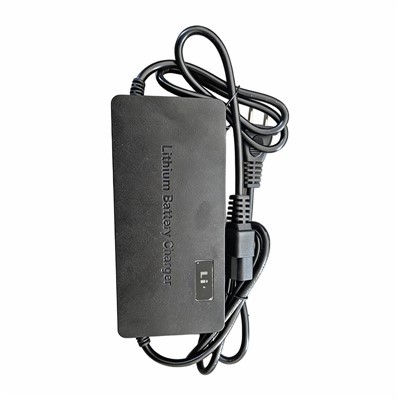
In conclusion, a lithium battery charger can generally charge a battery that has been stored for a long time, but it depends on the battery’s condition. Our lithium battery chargers are equipped with advanced features and algorithms to handle different battery states, including those of long – term stored batteries. However, it is important to follow proper safety procedures and inspection steps when charging such batteries.
Battery Charger If you are in the market for high – quality lithium battery chargers that can handle a variety of battery conditions, including long – term stored batteries, we are here to help. We offer a wide range of chargers with different specifications and capacities to meet your specific needs. Contact us to start a procurement discussion, and our team of experts will be glad to assist you in finding the best charger solutions for your applications.
References
- Linden, D., & Reddy, T. B. (2002). Handbook of Batteries. McGraw – Hill.
- Tarascon, J. M., & Armand, M. (2001). Issues and challenges facing rechargeable lithium batteries. Nature, 414(6861), 359 – 367.
- Chen, Z., & Evans, D. J. (2007). A review of the features and analyses of the solid electrolyte interphase in Li – ion batteries. Electrochimica Acta, 52(22), 6332 – 6341.
Tianchang Hengze Technology Co., Ltd.
With abundant experience, we are one of the most professional lithium battery charger manufacturers and suppliers in China. Please rest assured to buy bulk lithium battery charger made in China here from our factory. If you have any enquiry about quotation, please feel free to email us.
Address: No. 8 Sanxing Road, Qinlan Town Industrial Park, Tianchang City, Chuzhou City, Anhui Province, P.R. China
E-mail: 604894957@qq.com
WebSite: https://www.hengzebc.com/
